
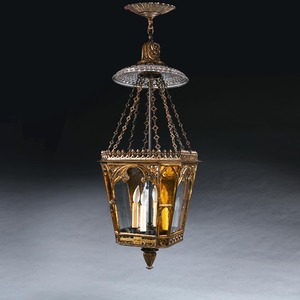
Napoleon Buonapartes Regency Gilt Brass Hall Lantern Supplied by George Bullock For Use at St Helena #3089
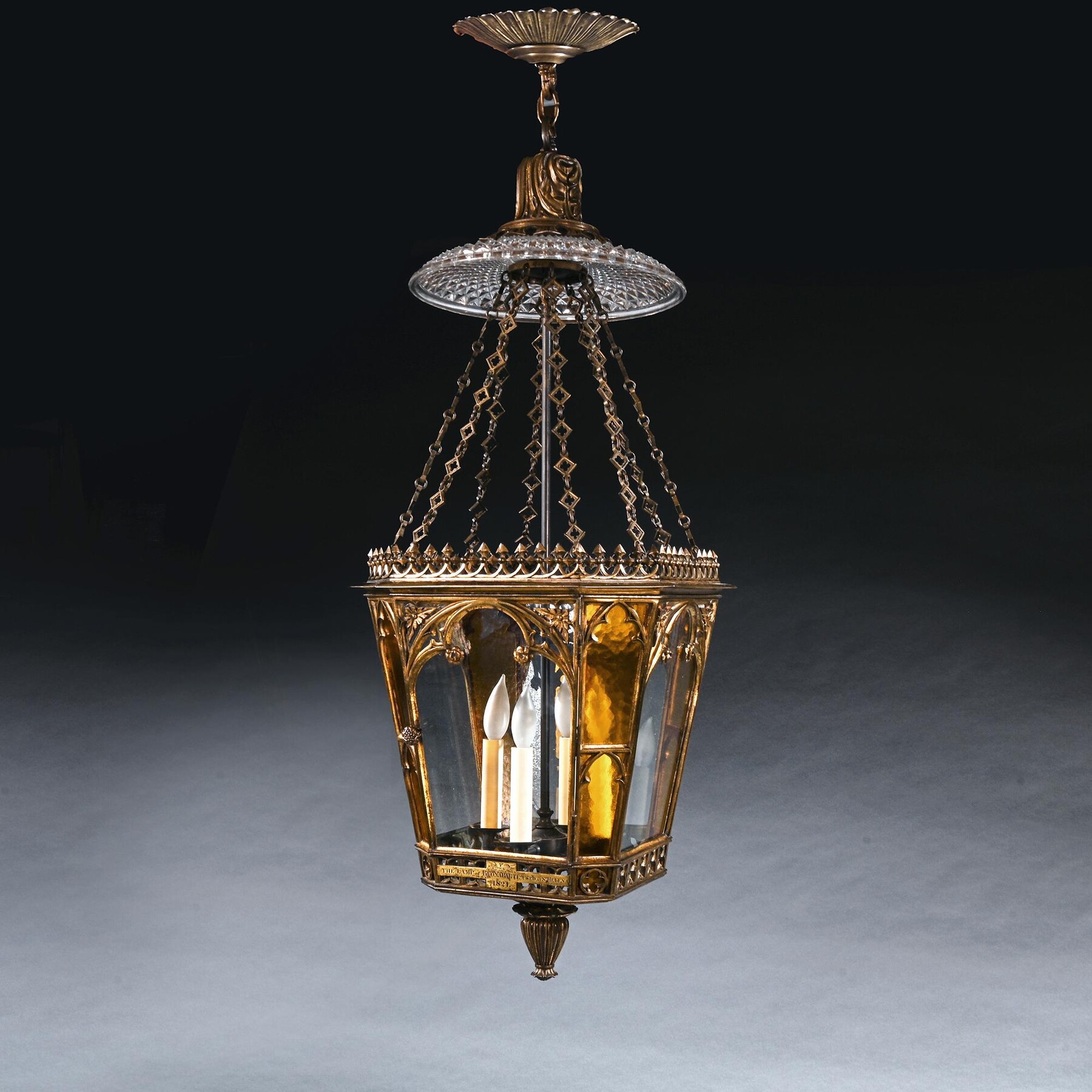
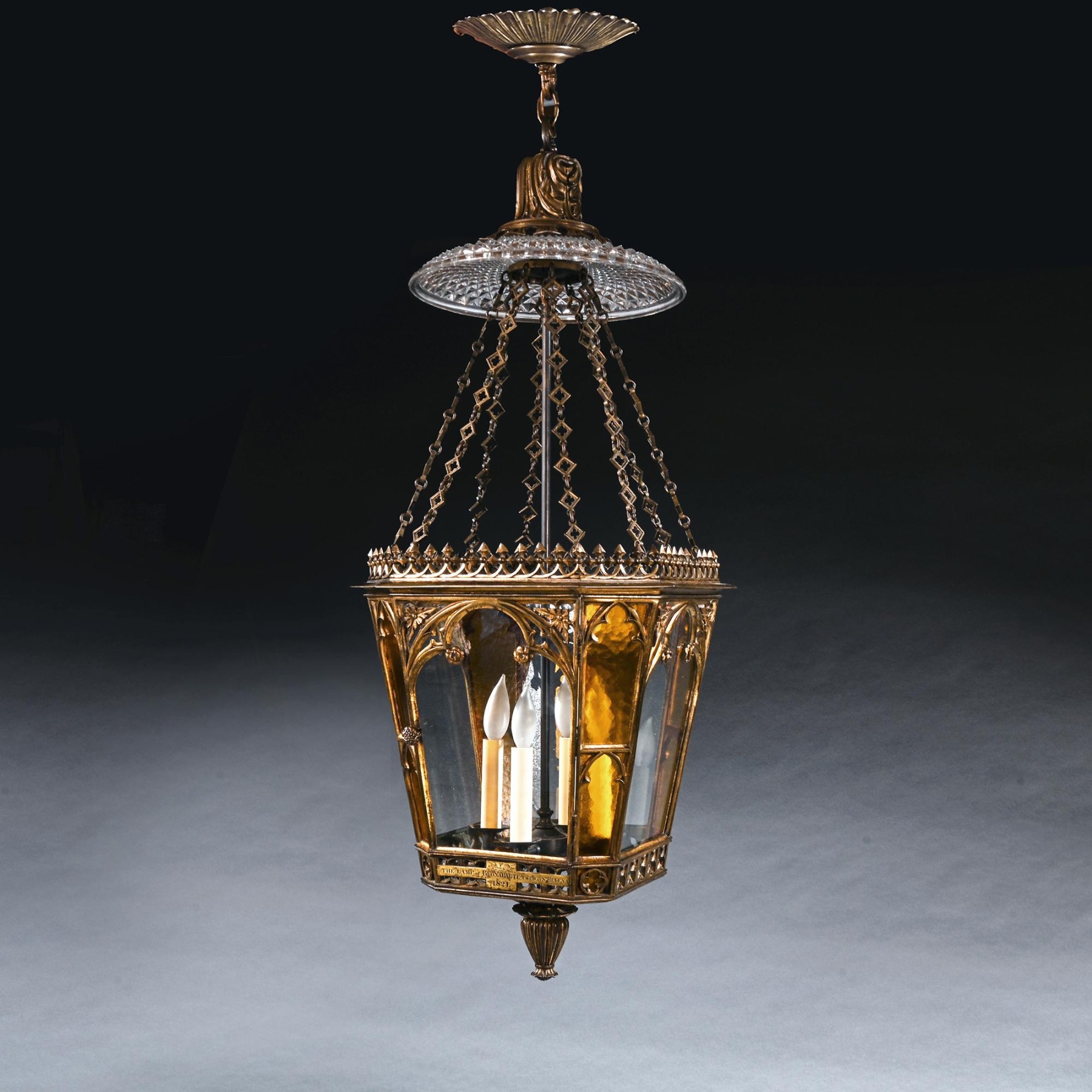
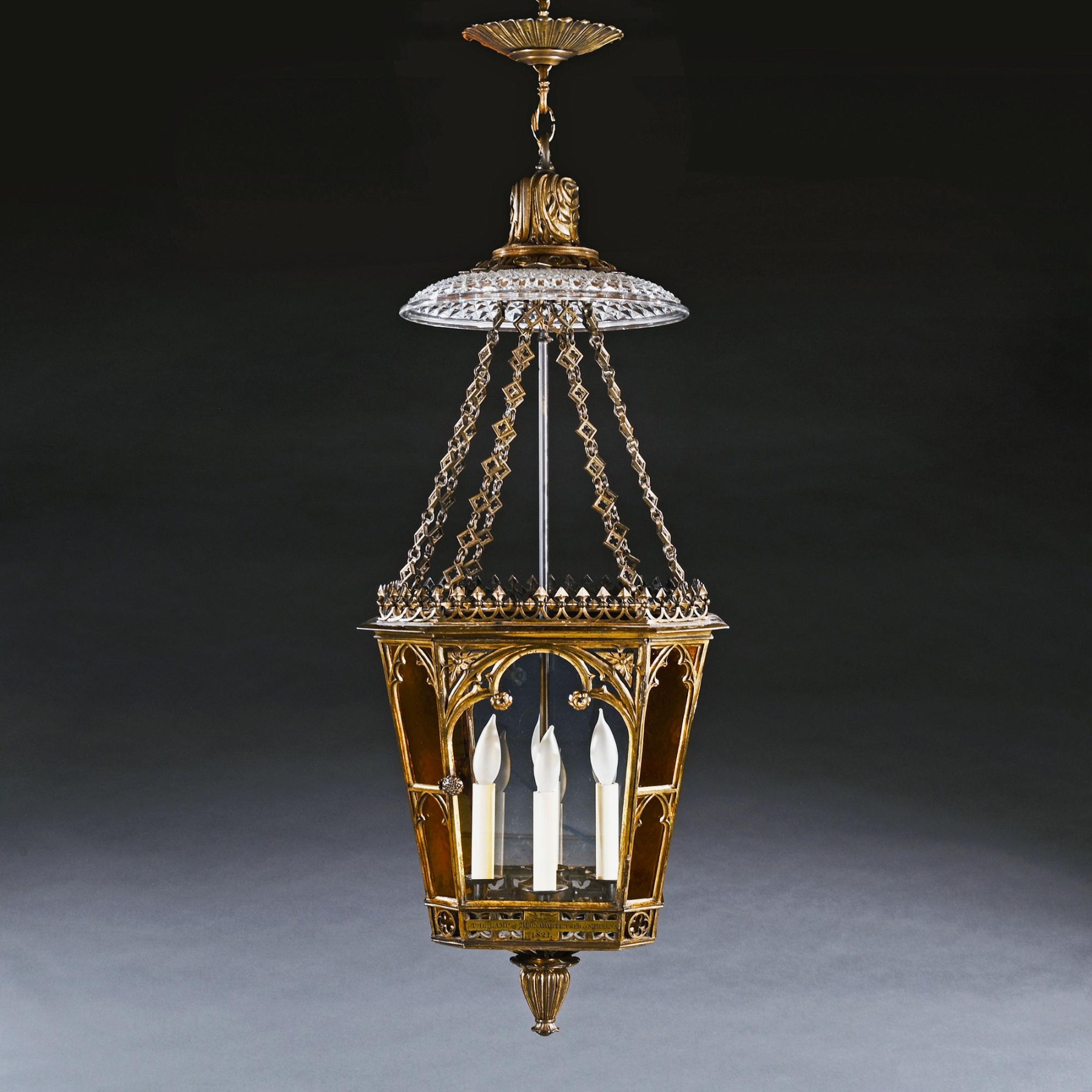
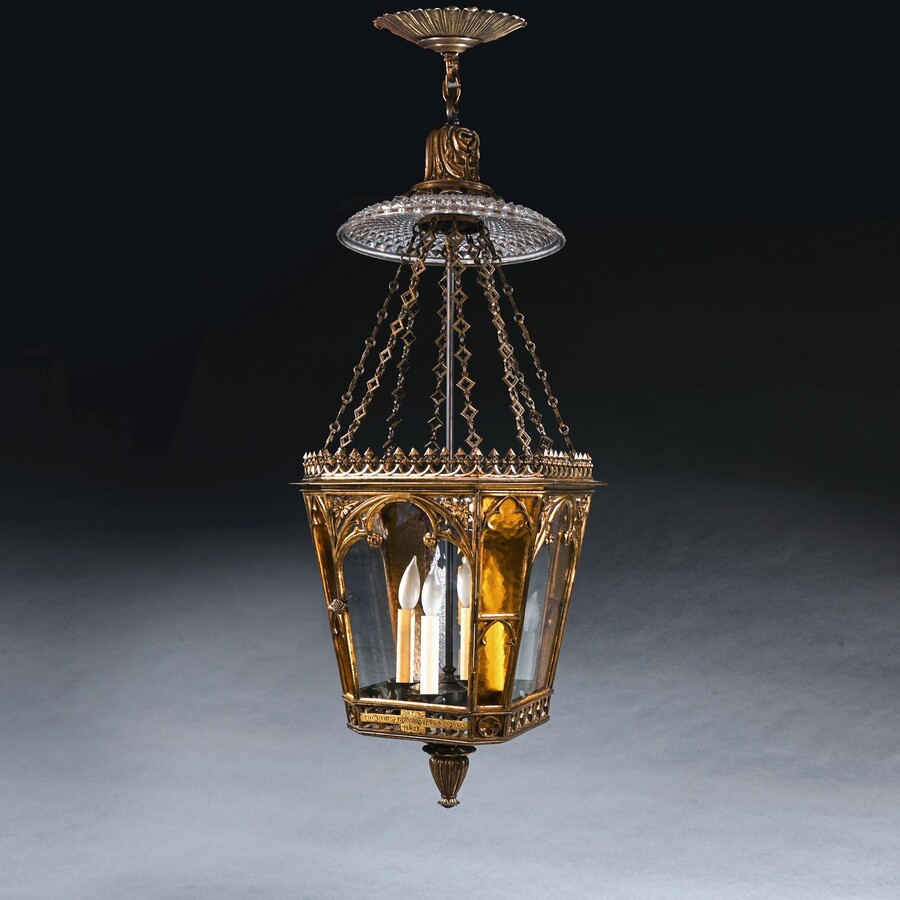
Extremely Rare and Important Regency Gilt Brass Hall Lantern Supplied by George Bullock to the Emperor Napoleon Buonaparte in Exile at Longwood House, St Helena 1816.
Provenance
Supplied by George Bullock for the use of the exiled French Emperor Napoleon Bonaparte at Longwood House, St Helena, January 1816;
Auction Catalogue of Effects at Longwood belonging to the late Emperor Napoleon, St Helena, April-August 1822, lot 72, acquired by Thomas Greentree;
Pelham Galleries, London;
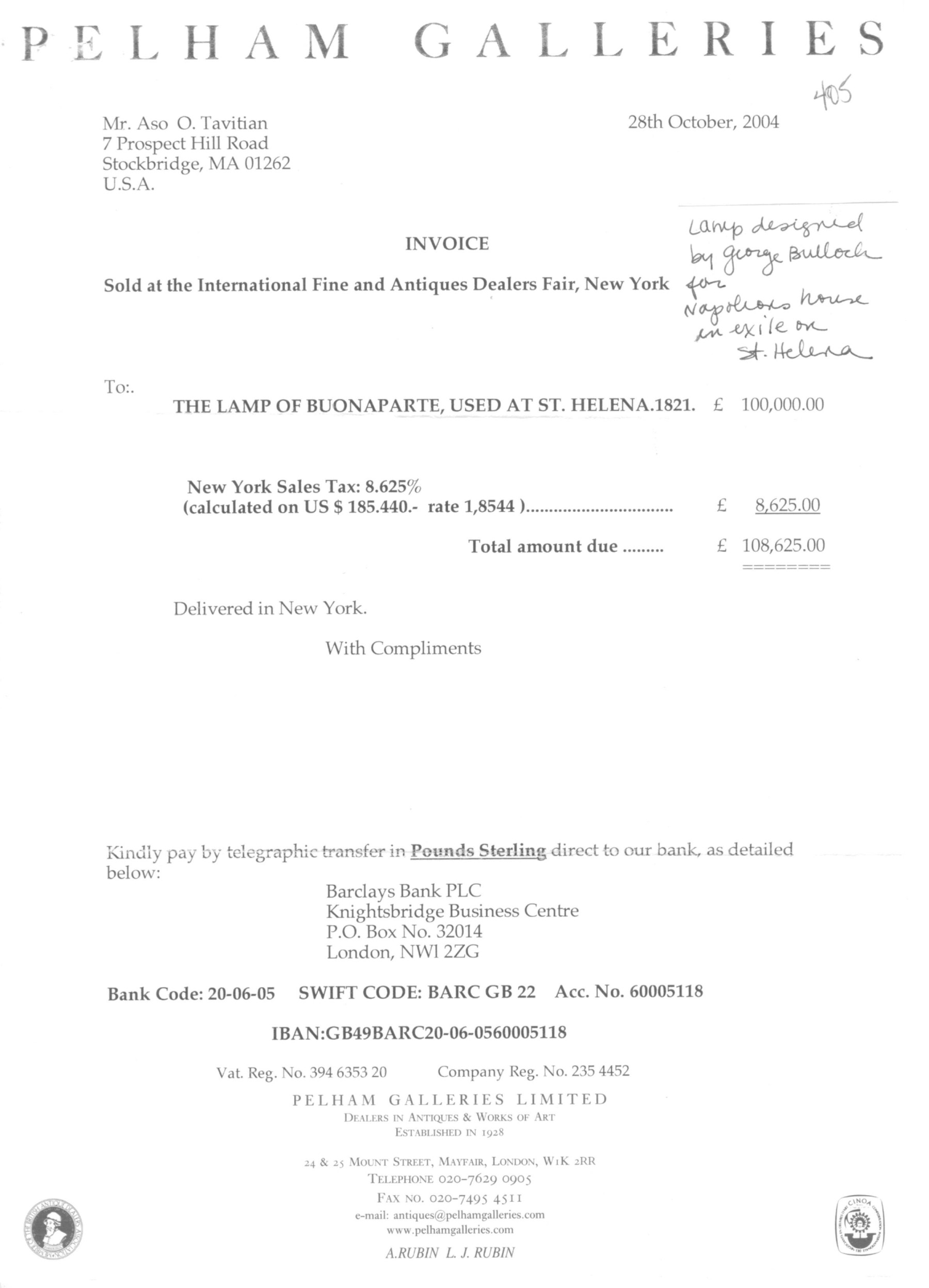
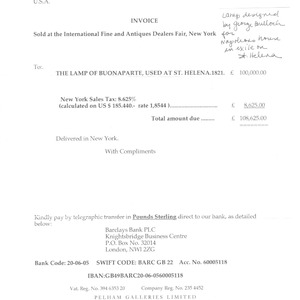
Acquired by Aso O. Tavitian at the International Fine Art & Antique Dealers Show, Park Avenue Armory, New York, 28 October 2004. ( copy of invoice attached ) The exchange at the time Aso would have paid almost 200k USD for this with tax.
Literature
Martin Levy, 'Napoleon in Exile. The Houses and Furniture supplied by the British Government for the Emperor and his Entourage on St Helena', Furniture History XXXIV (1998), fig.59 p.75 and Appendix I, no.34
Martin Levy, 'Lamps, Lanterns and Lustres: Lighting Designed by George Bullock (d.1818)', Furniture History, Vol. 56, pp.177-188
Jonathan Bourne and Vanessa Brett, Lighting in the Domestic Interior: Renaissance to Art Nouveau, London 1991, p.166, fig.609
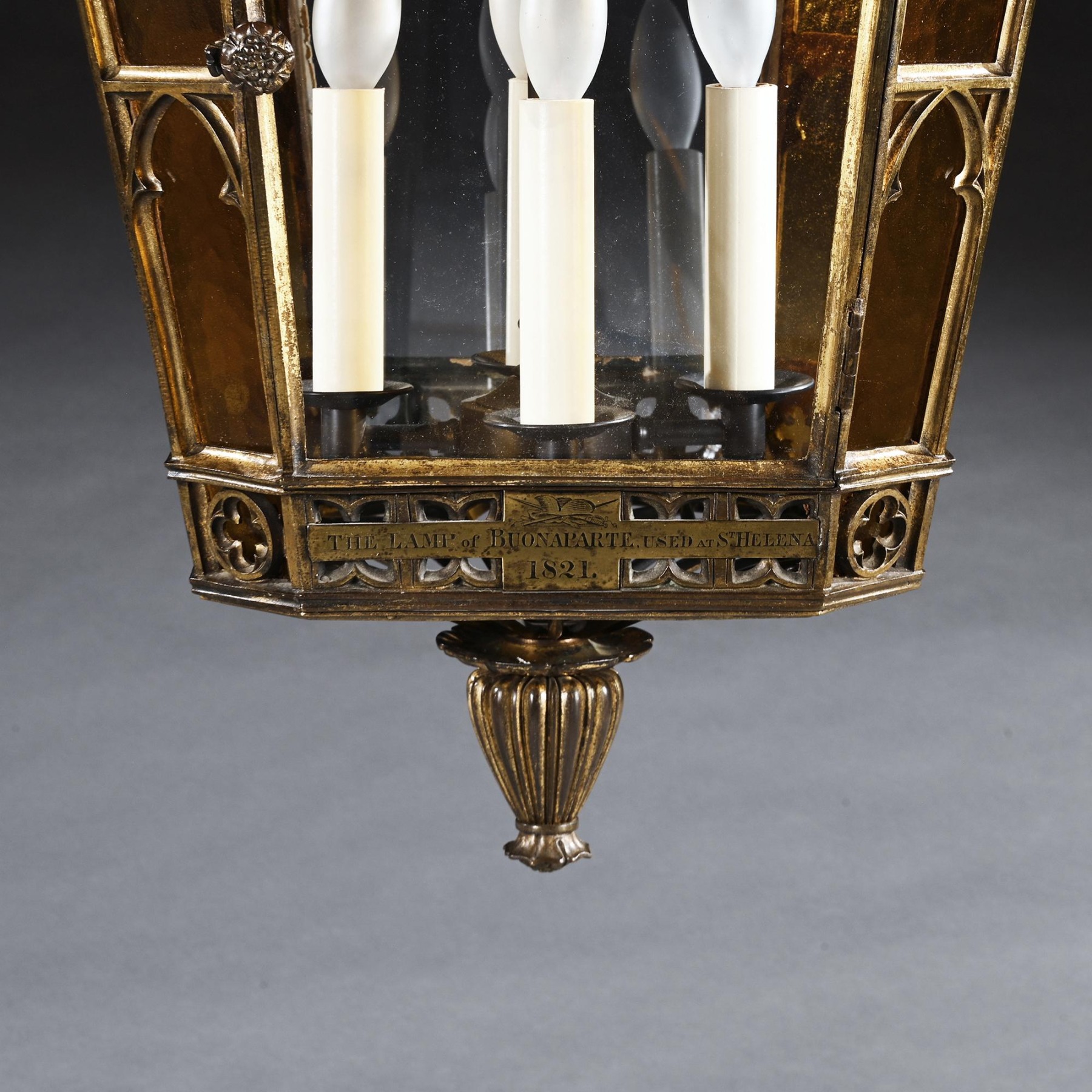
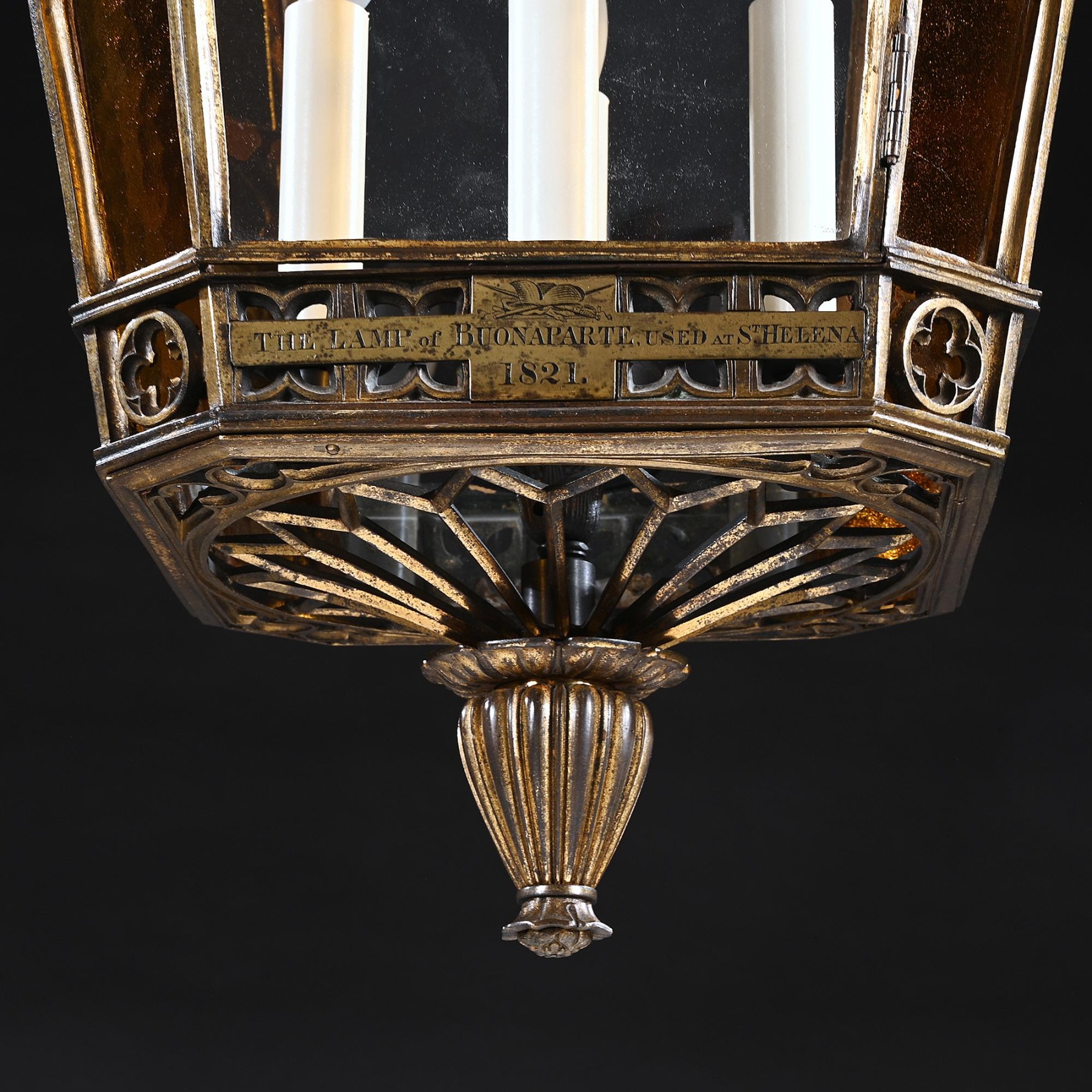
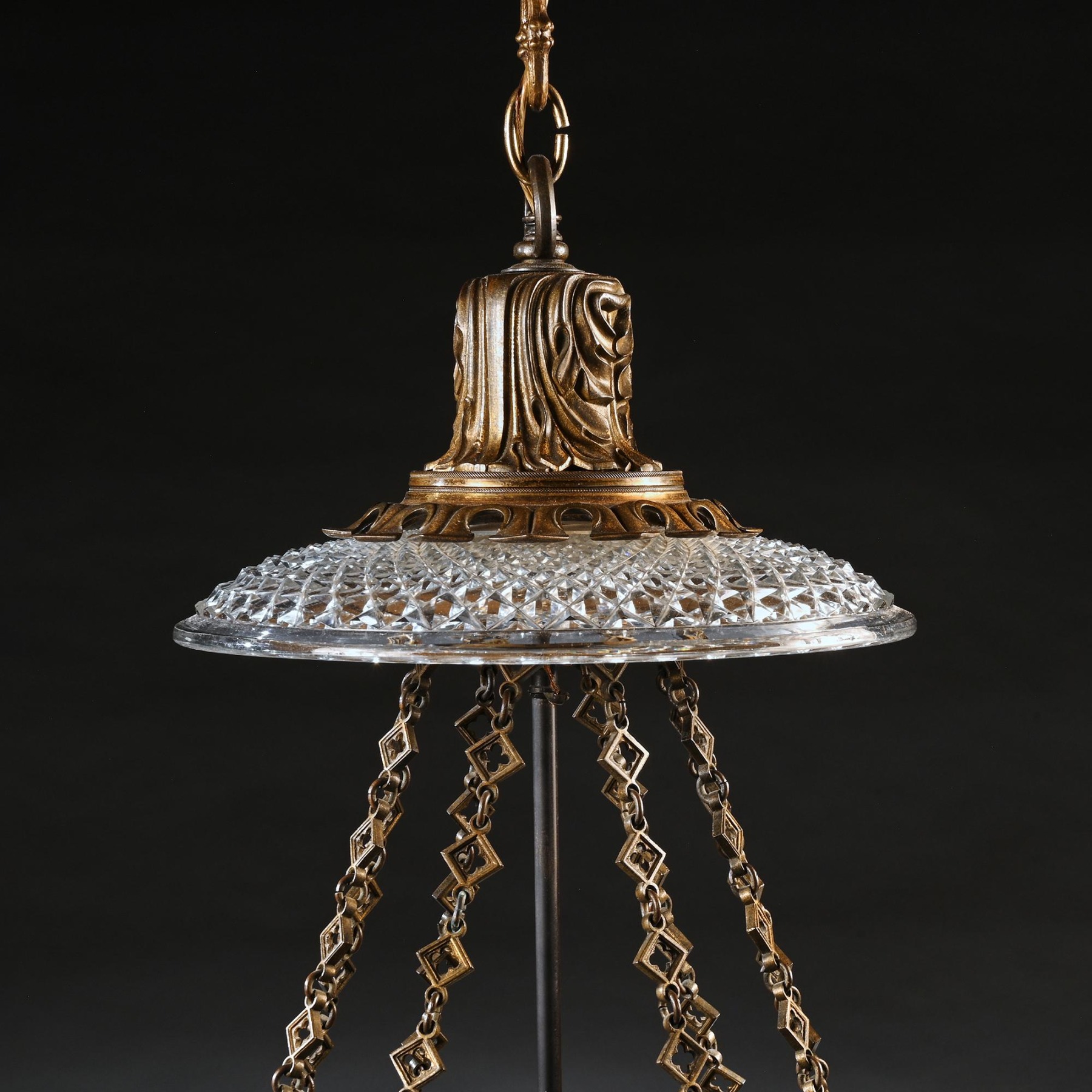
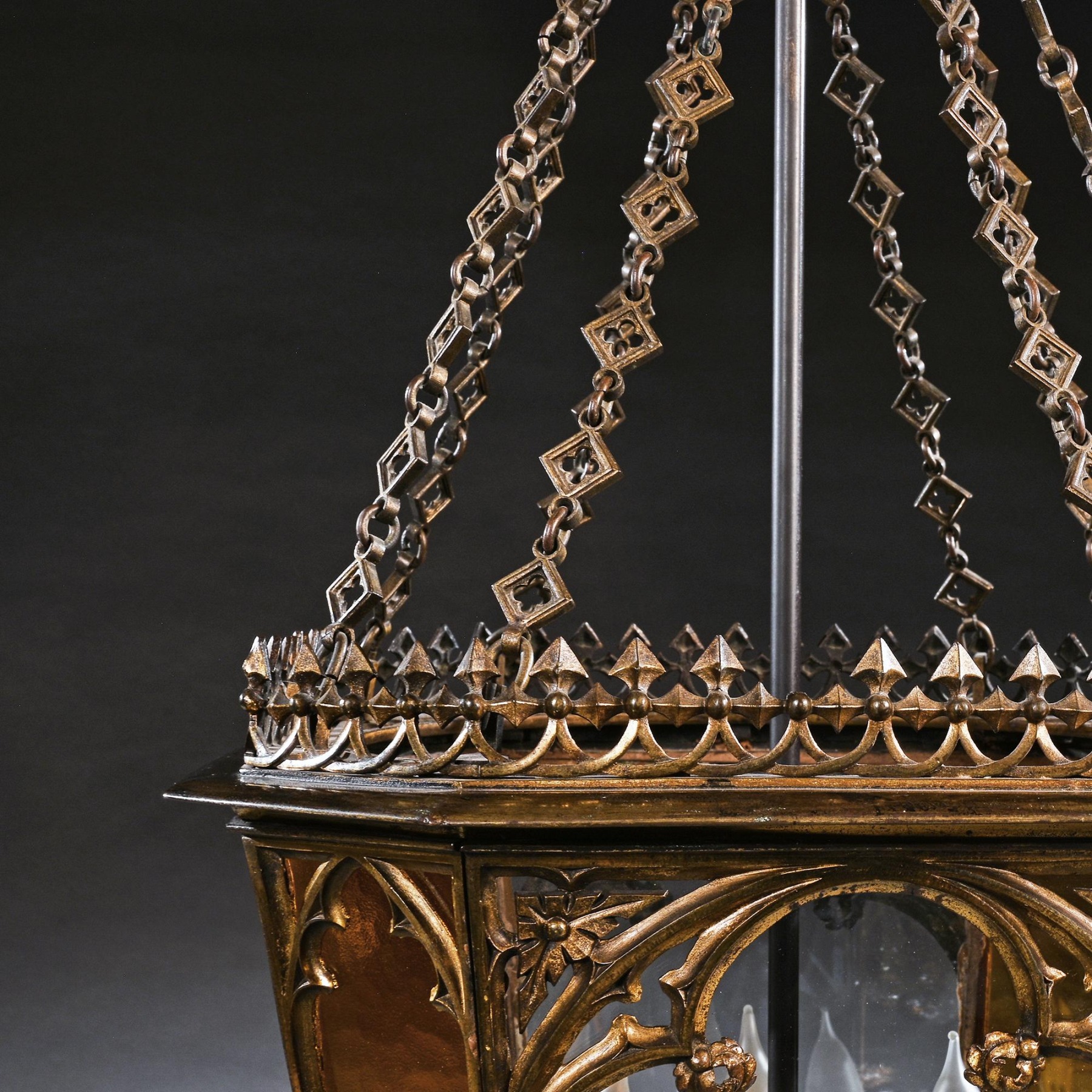
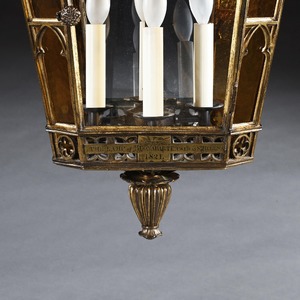
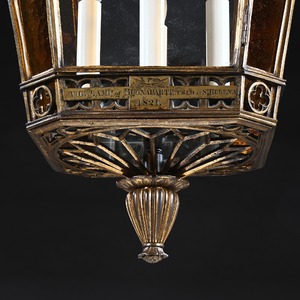
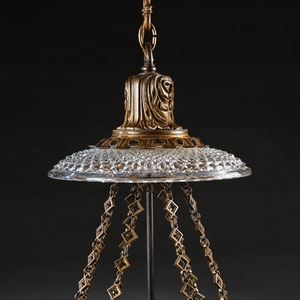
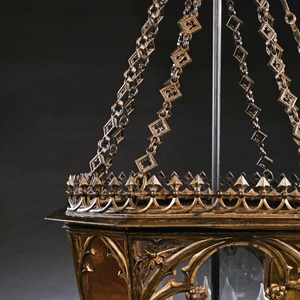
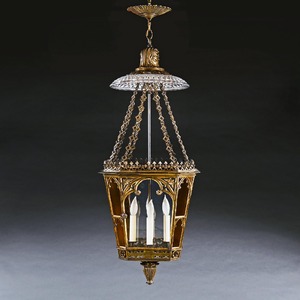
Of remarkable neo-gothic form, this fine hall lantern retains its original hanging chain with a cut glass corona intended to stop smoke billowing throughout the hallway when lit with candles. The lantern has fine amber glass panels surrounded by gilt brass tracery. There are panels of finely fretted metalwork to the top and lower aprons and a hanging finial of naturalistic form. The lantern has been electrified with a series of candle bulbs attached to the central fitting. This lantern, one of the most important examples of its kind, has extraordinary provenance having been supplied to Napoleon in exile at the expense of the British government. This is recorded on a brass plaque attached to the piece which reads:
THE LAMP of BUONAPARTE USED AT ST. HELENA / 1821
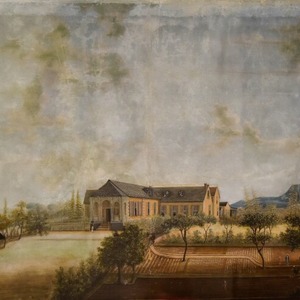
This fine hall lantern was part of the commission from George Bullock that was paid for by the British government and used to furnish the Emperor Napoleon's home in St Helena where he was forced to live out the remainder of his life in exile. Napoleon's residence on the island, Longwood House, was furnished to the highest possible standard with furnishings being sourced from leading London makers. George Bullock supplied the furniture, Wedgwood the ceramic items, Rundell Bridge and Rundell the silver and Parker and Perry the glass and glass lighting. Martin Levy has studied Bullock and his work in great detail and an entire Furniture History Society journal, edited by him, was dedicated to the Longwood House commission. The present piece is illustrated in that journal on p.75, fig. 59, and its known history is recorded in the appendices. Supplied by Bullock in 1816, it is likely that it was made by the London firm of W & S Summers, suspected by Levy to have been the source of much of Bullock's lighting. In his article titled 'Lamps, Lanterns and Lustres: Lighting Designed by George Bullock (d.1818)', Levy discusses the sale of Bullock's stock in trade, stating:
'Lot 39: ‘Three small brass brackets to support lamps, 4 double brass candle branches, two small ditto, and one double branch on serpents; 15 brass and bronze nozzels, and two 2-light branches’ (sold for £4 14s 6d to, perhaps significantly, Summers [see below]).
Lot 40: ‘Four double brass candle branches, sundry bra [sic] nozzels, &c. and a paper of cotton wicks’ (sold for 2 guineas to Walker).
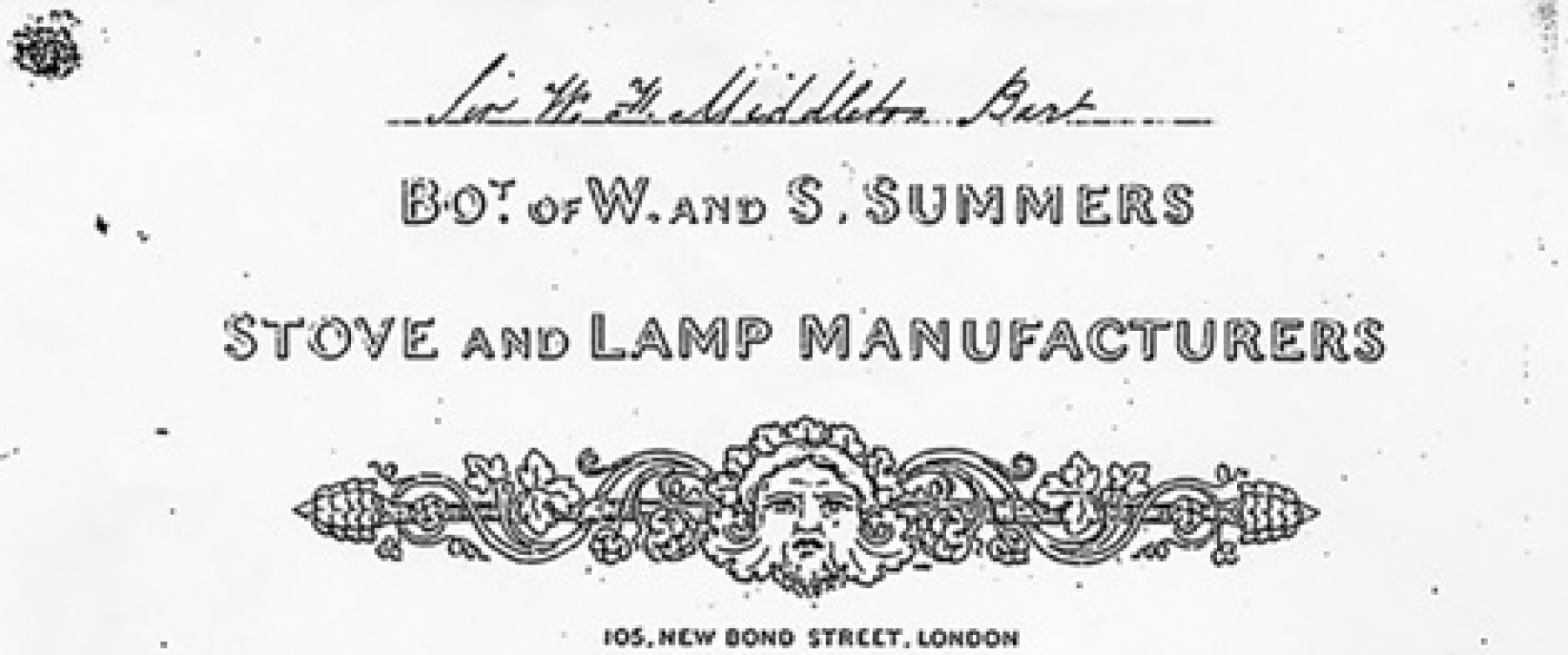
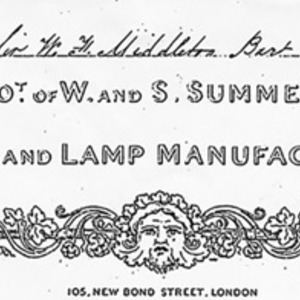
Despite the lack of firm documentation, there are circumstantial clues that indicate who might have collaborated with Bullock in the manufacture of lighting. Most likely is the firm of W. and S. Summers, ‘Stove and Lamp Manufacturers’, whose
billhead incorporates a Bullock-like thyrsus; the firm was situated at 105 New Bond Street, London, just a short walk from Tenterden Street. This same firm supplied ‘ironmongery &c. &c.’ amounting in value to £127 16s 6d to Matthew Robinson Boulton of Tew Park. The two fenders included in George Bullock: Cabinet-Maker, for example, may perhaps be examples of work by Summers. In addition to lot 39, noted above, Summers bought a further eight lots at the ‘Stock in Trade’ sale; five of these related to metalwork'.
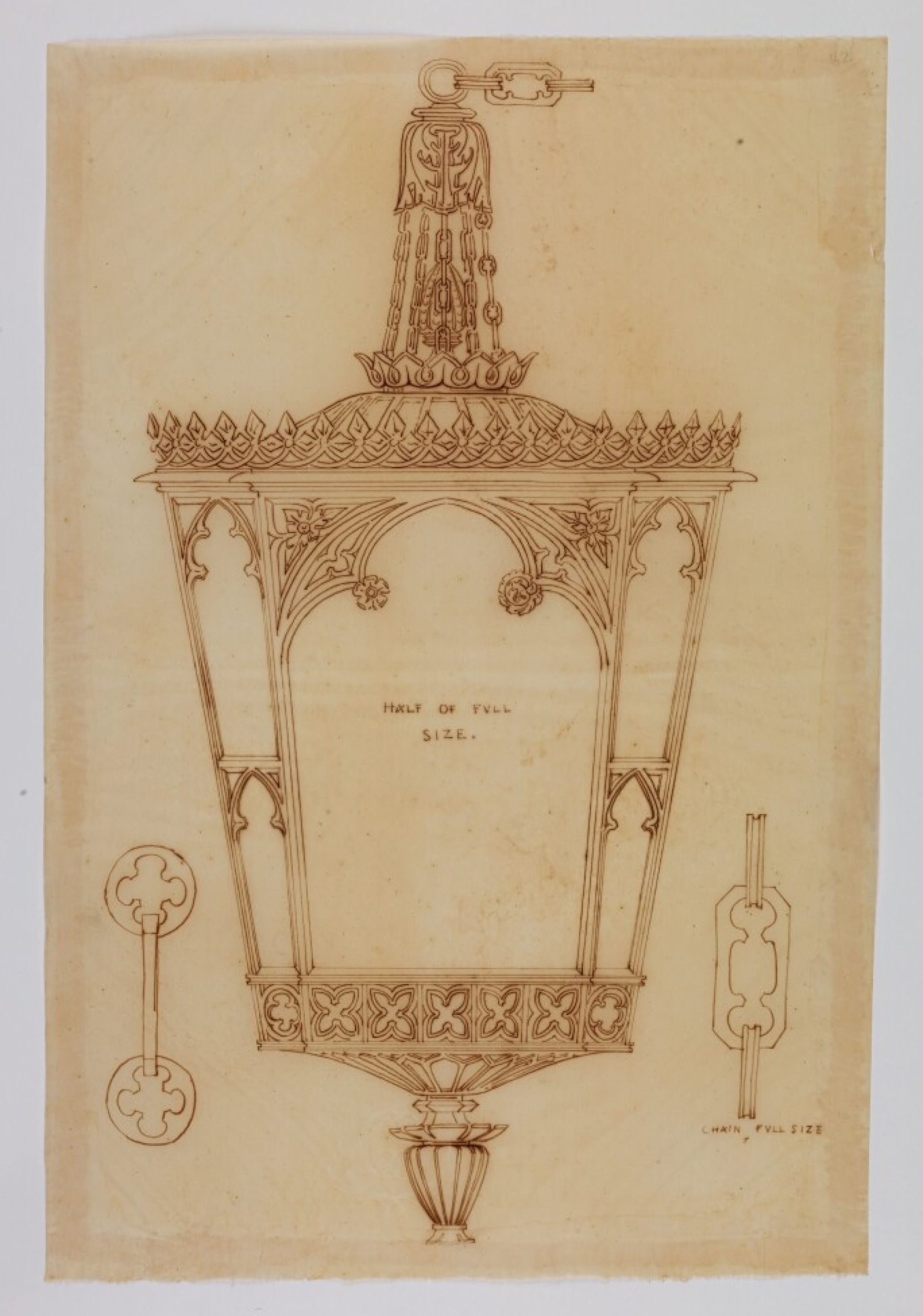
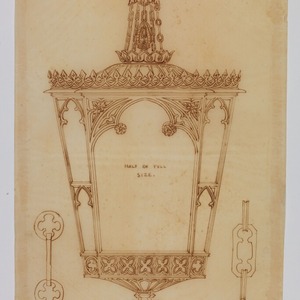
Bullock's work is usually attributed on the basis of a series of designs preserved in Birmingham Museums and Art Gallery known as the Wilkinson Tracings. A design for a hall lantern, of remarkably similar form to the present piece, is included amongst these designs and illustrated here. Also illustrated is the billhead of W and S Summers, showing the thyrsus design mentioned by Levy in the text quoted above.
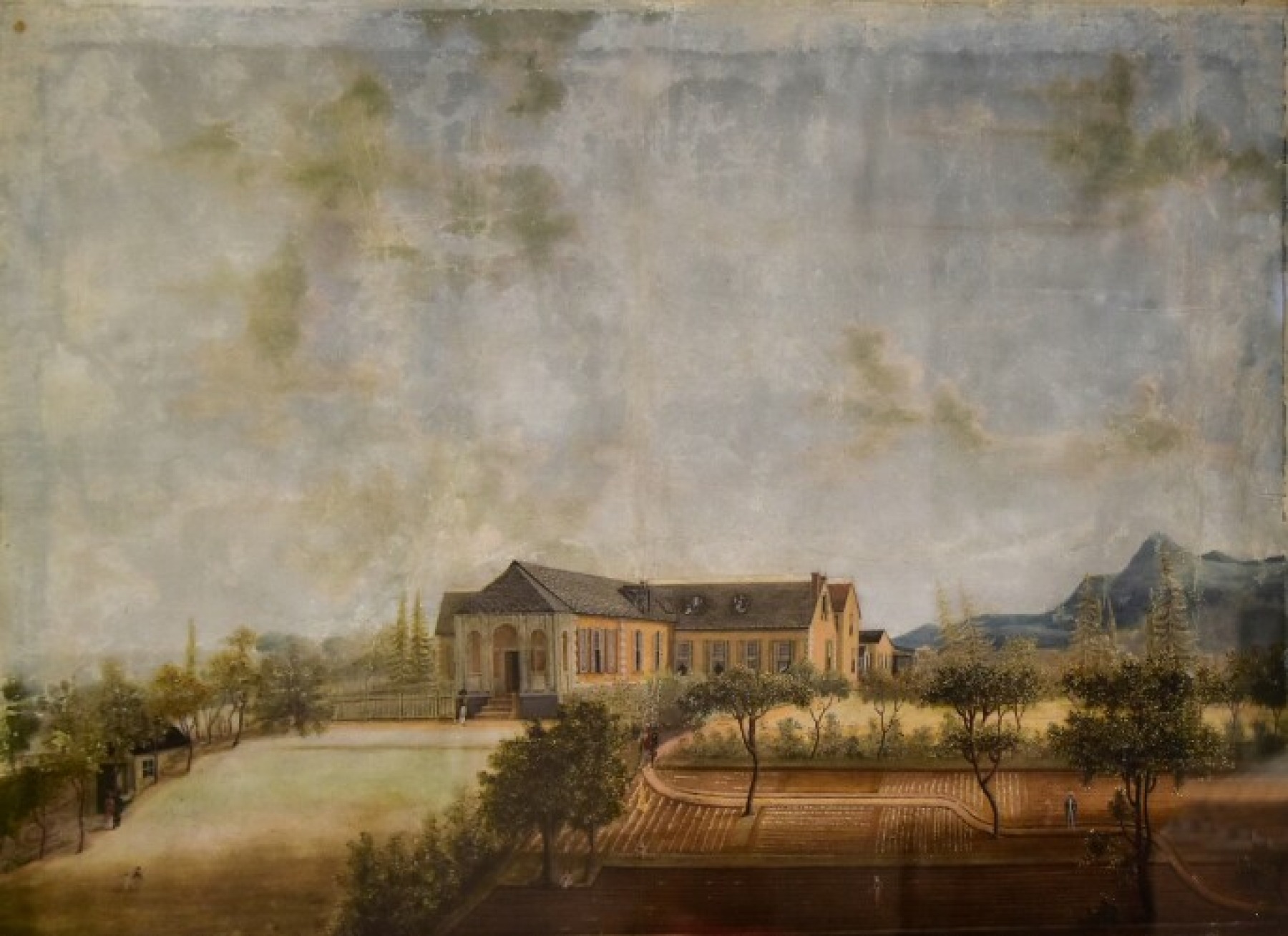
After his defeat at Waterloo, the future George IV decreed that Napoleon 'should be furnished in his banishment with every possible gratification and comfort' and Longwood House, previously the home of St Helena's Lieutenant Governor, was furnished in according to the future King's wishes. In the inventory of the furnishings of the house, the present piece was inventoried in the entrance hall as:
'a Brass Lanthorn & 2 burner Lamp'
and its cost is listed as £21, a very large amount at the time. The furniture supplied by Bullock for this commission is almost entirely of neoclassical regency style with the present piece the only known example of the neo-gothic in the entire furnishing scheme. It has been suggested that, due to the urgency with which the furnishings had to be procured, items were selected from stock and so Bullock sent the only suitable lighting fixture he had available, despite this being in the gothic taste and the rest of the pieces he supplied being of a different character. This makes the present piece all the more interesting and it must have been quite the talking point when the former emperor received visitors.
When Napoleon died in May of 1821 the contents of the house were readied for sale and sold in a series of auctions beginning in April of 1822. The present piece was lot 702, sold on 12th of August with the buyer being 'T. Greentree'. This is believed to be Thomas Greentree, a junior East India Company official elected storekeeper on St Helena in 1819. His wife, nee Elizabeth Doveton, was from one of the most socially prominent families on the island and received Napoleon as a guest on several occasions, an honour restricted to a very small number of families because of the associated security risks. Greentree was present at the Emperor's funeral and he is probably the same man who died in his house Malvern Link, Worcestershire, in 1857. He had presumably taken the lantern with him back to England.
The later 19th and early 20th century provenance of the present piece is unclear but it was later acquired by the great dealer Alan Rubin of Pelham Galleries. He advertised the piece in the UK magazine ANTIQUE, Vol. 7. Issue 3.
George Bullock
Although one of the leading makers of his time, Bullock's career is frustratingly poorly-recorded. Martin Levy has written an excellent biography with all of the known surviving references and sources and details of his known commissions which can be viewed online here
https://bifmo.furniturehistorysociety.org/entry/bullock-george-1777-1818
This fine hall lantern is one of Bullock's masterpieces and we are delighted to be able to offer such a storied piece to our friends and clients.
Total height with chain 51 inches - 130cm
Height: 39 1/2 inches - 100cm
Depth: 20 3/4 inches - 53cm
Delivery of products is based on weight. Some products are not available for delivery, and will be collection only. For more information on delivery costs, please click here