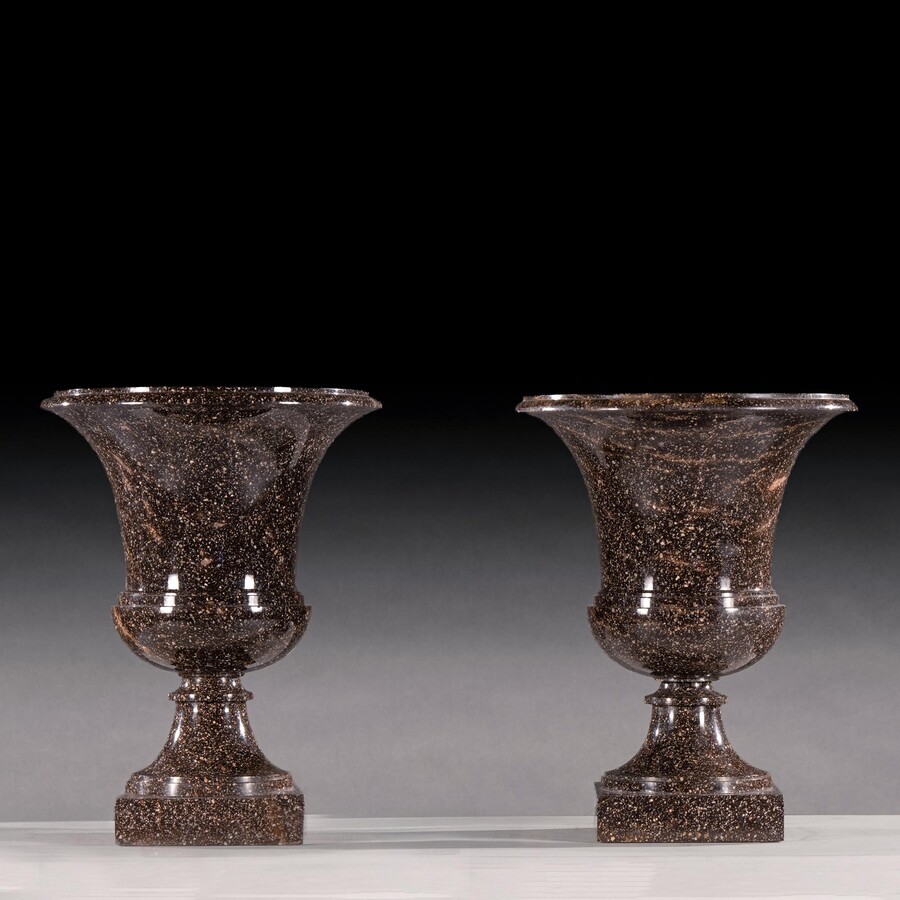
Grand Pair of Early 19th Century Swedish Blyberg Porphyry Campana Urns
#3094
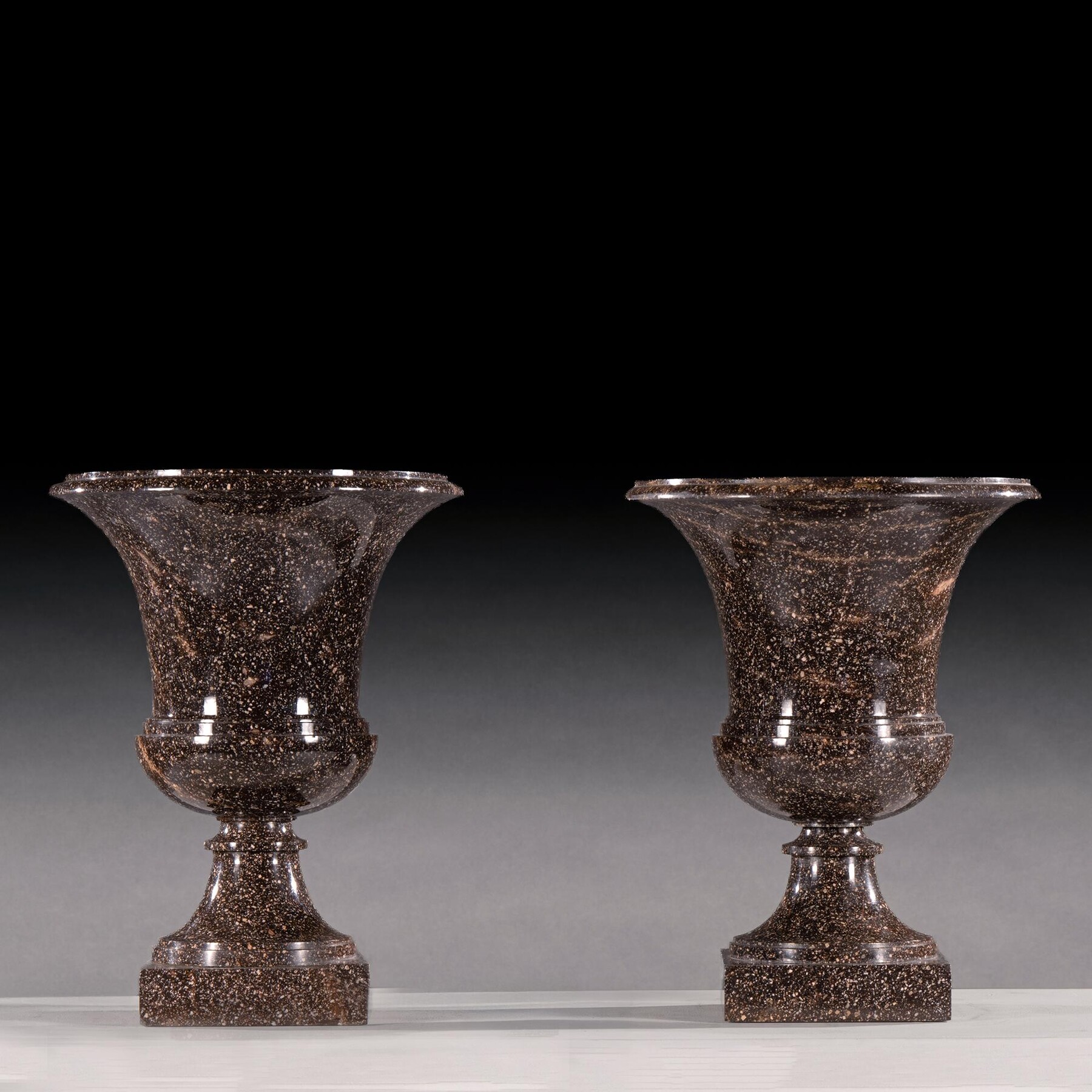
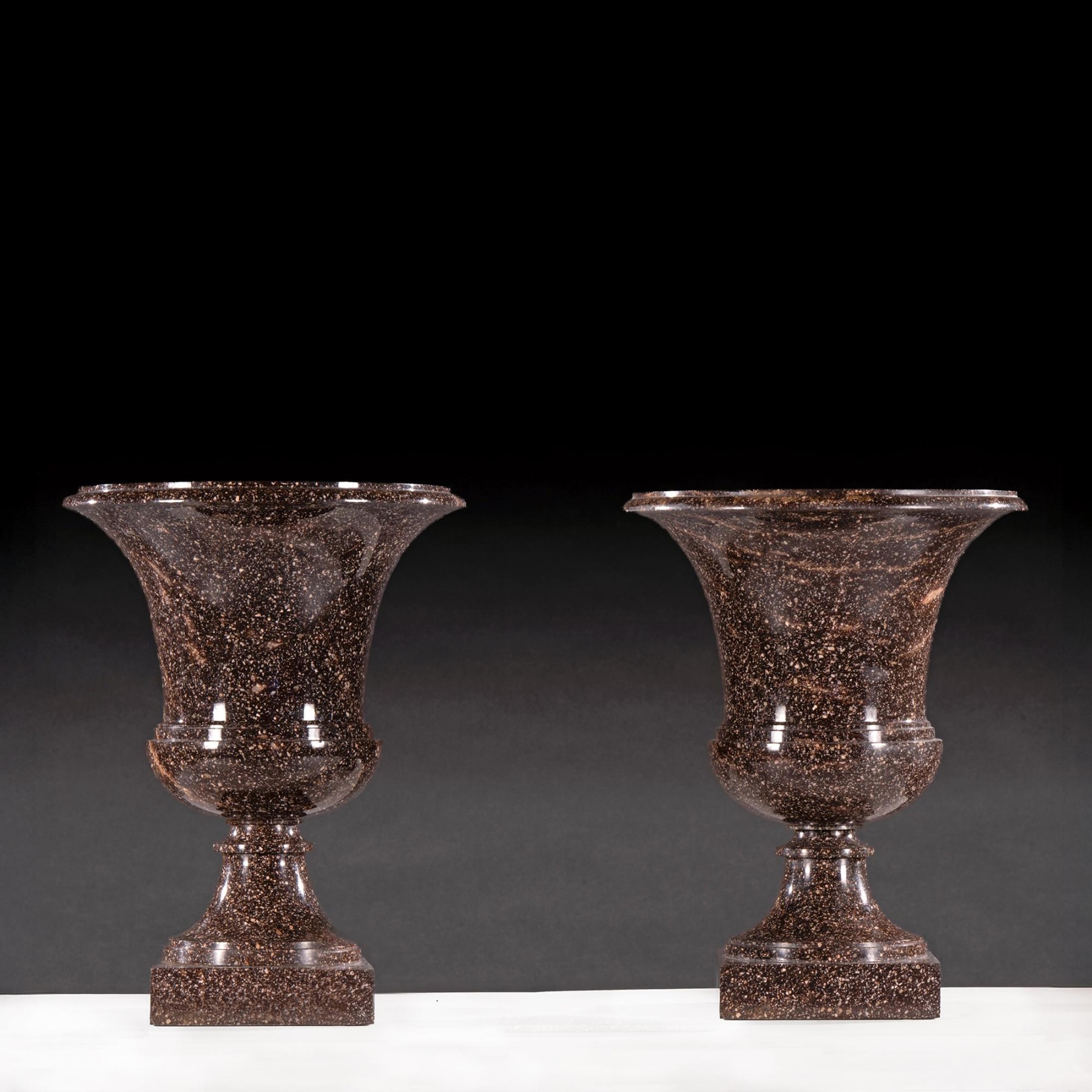
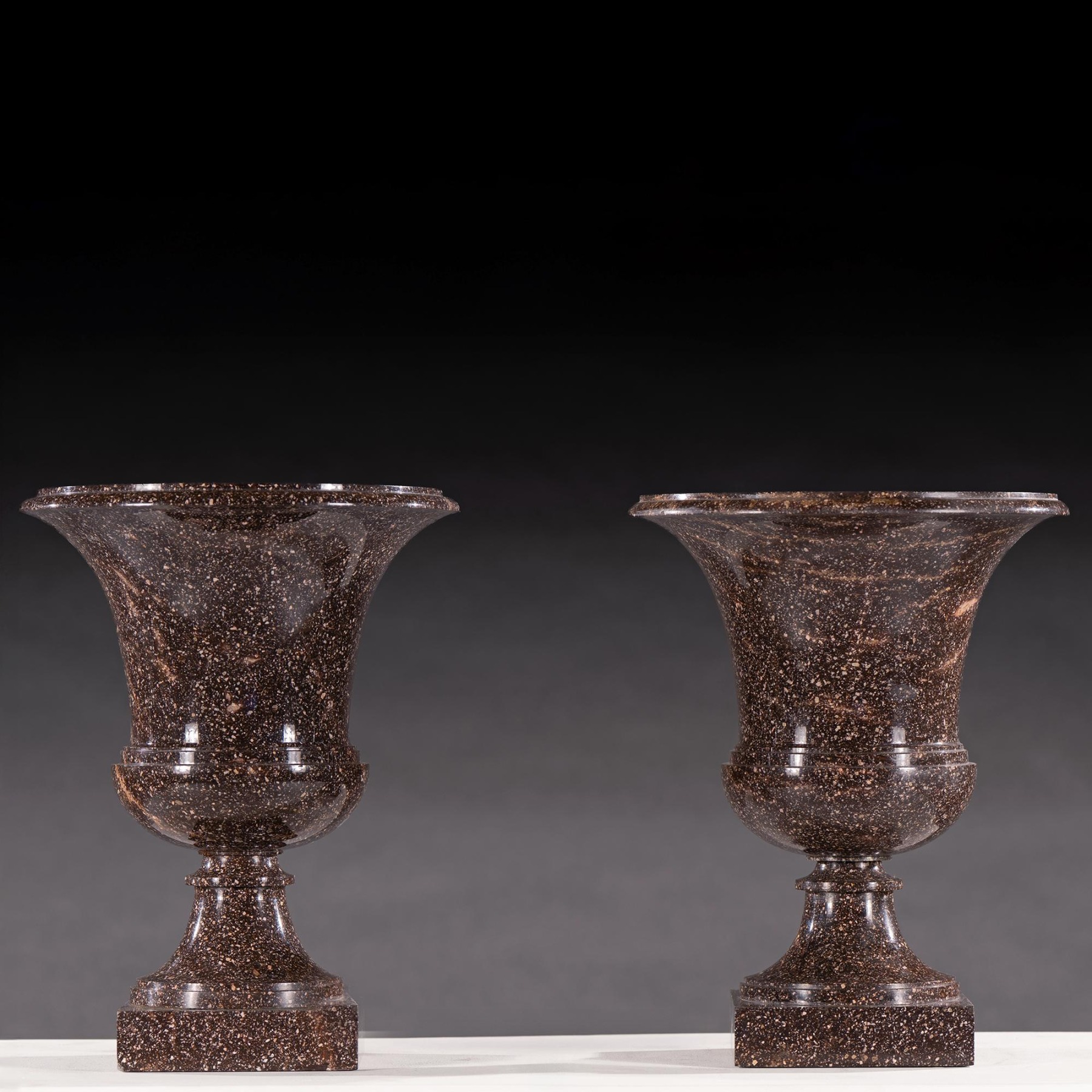
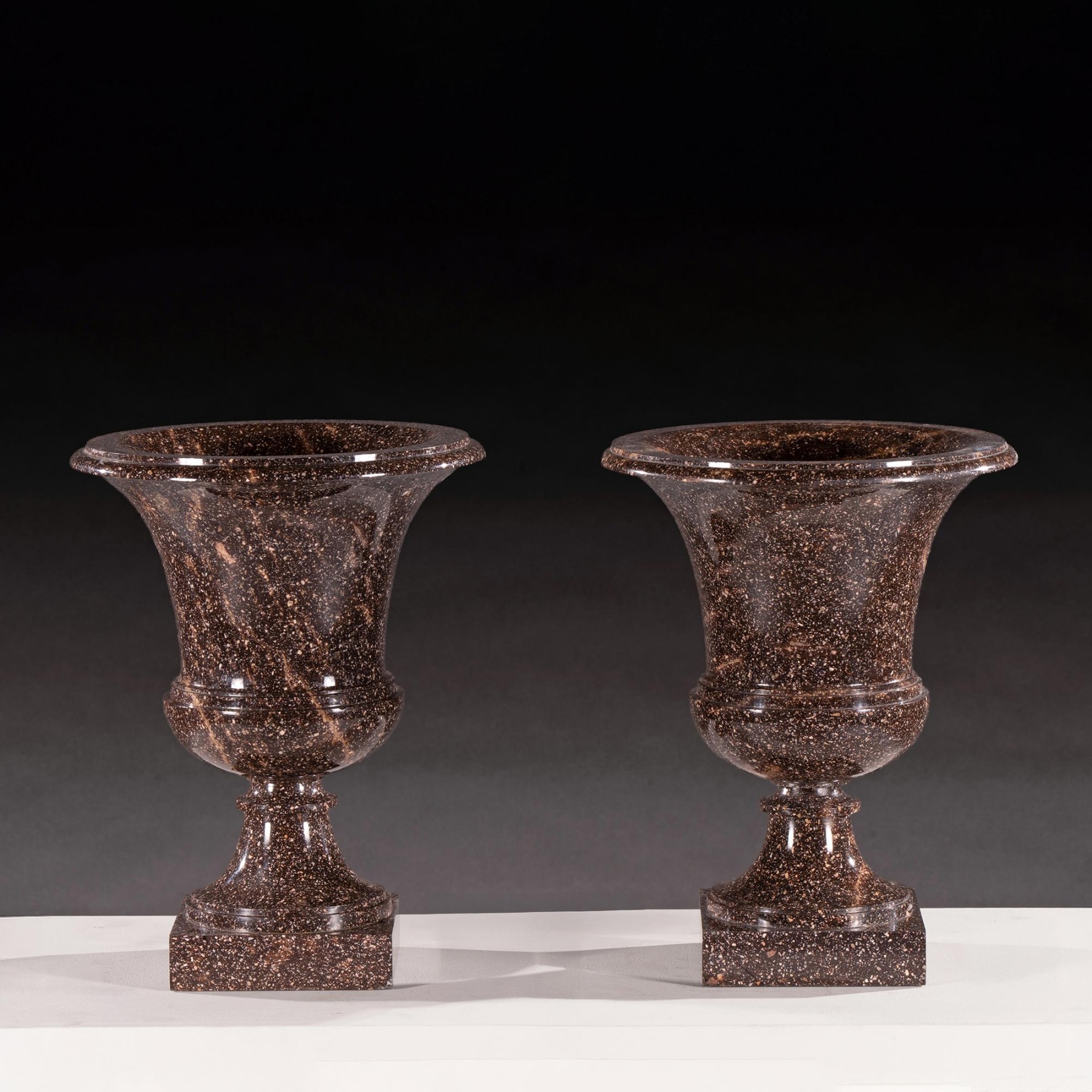
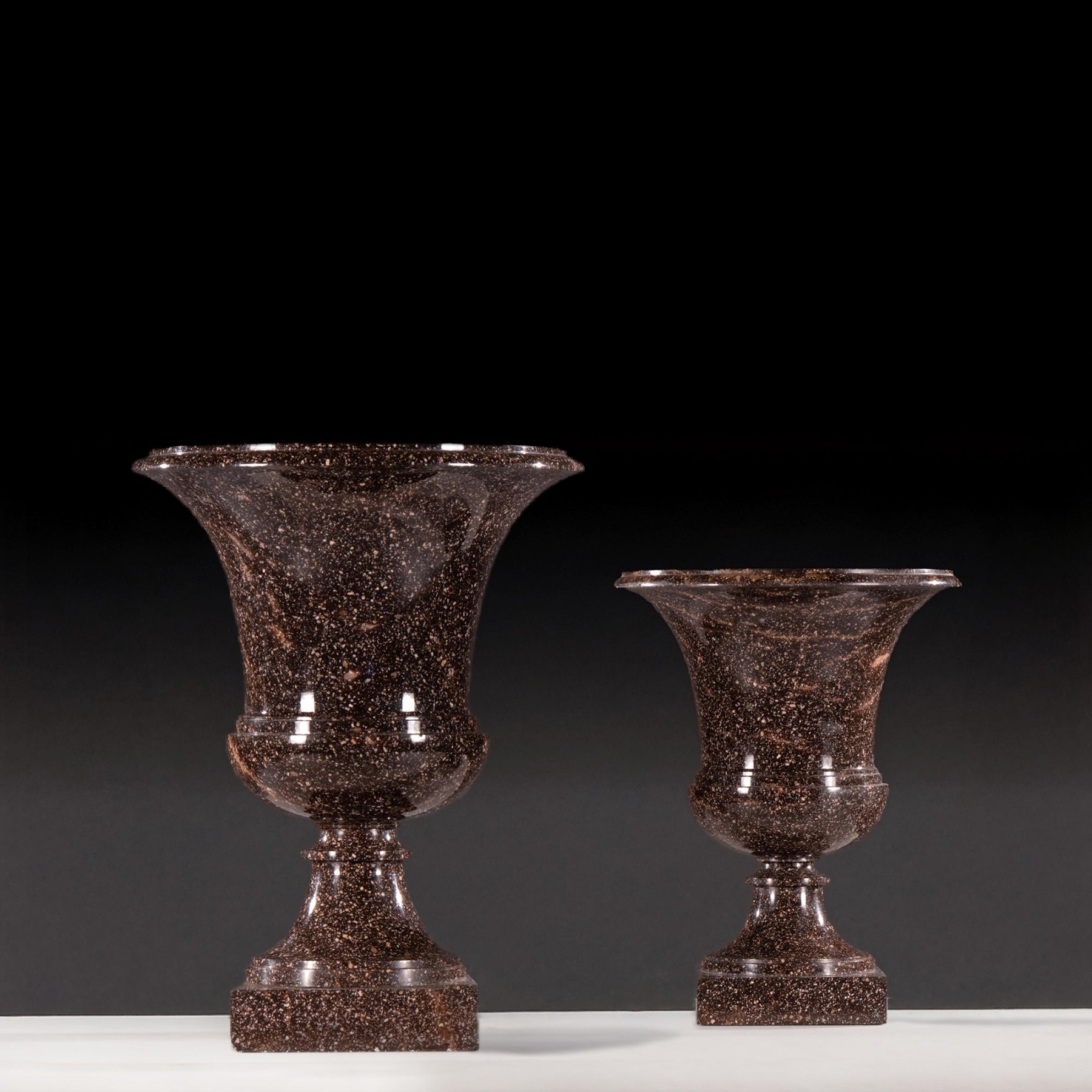
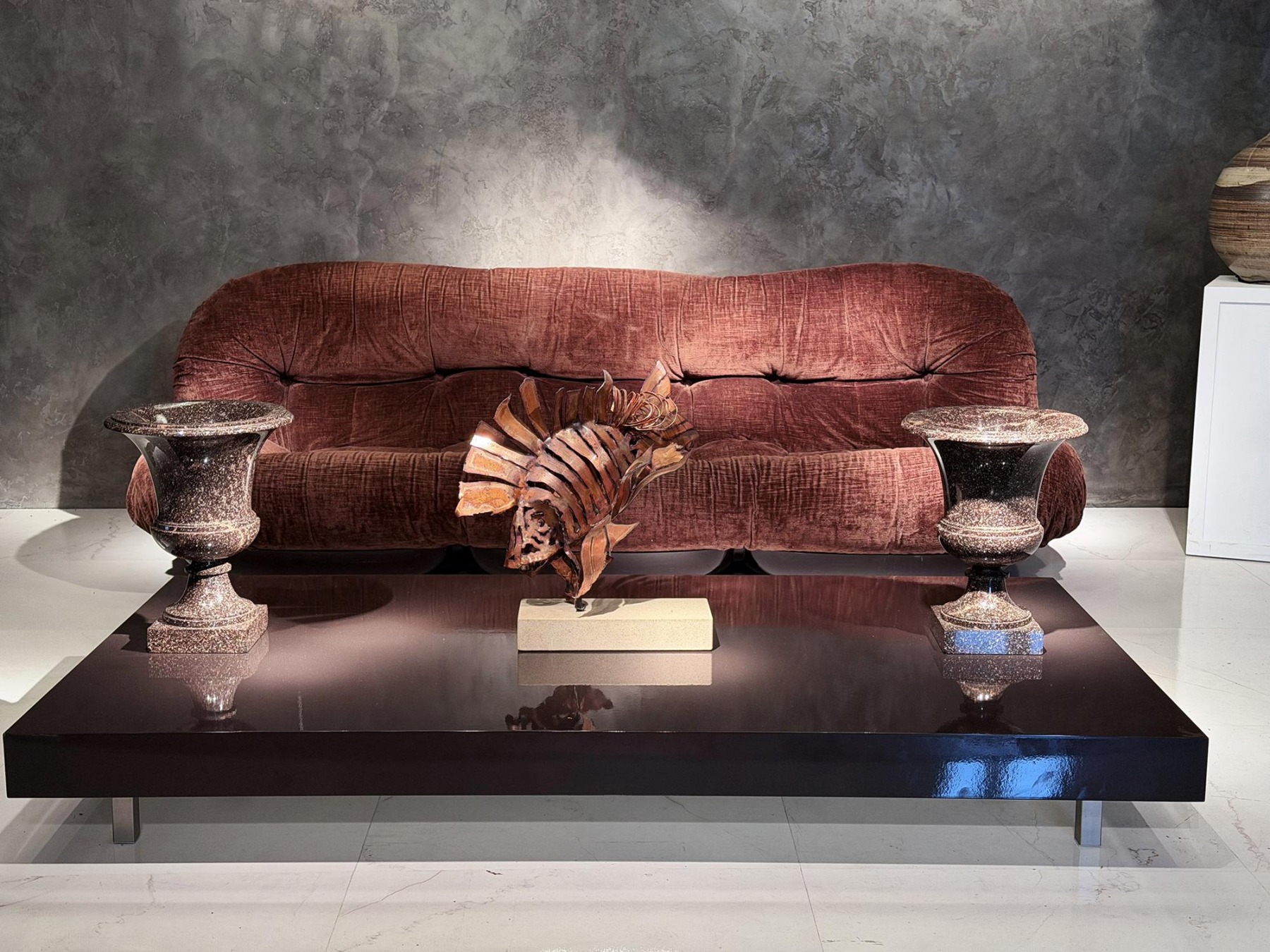
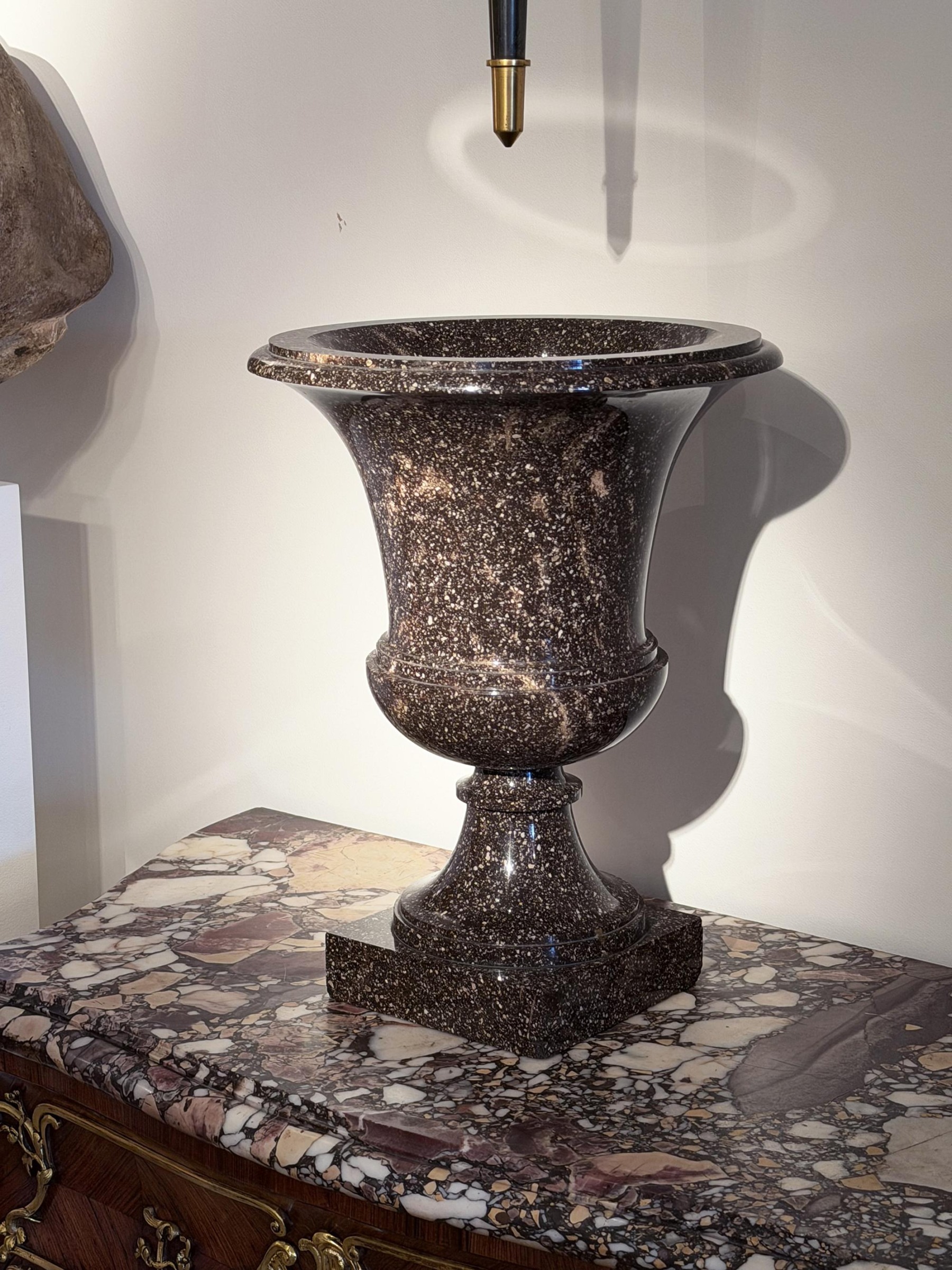
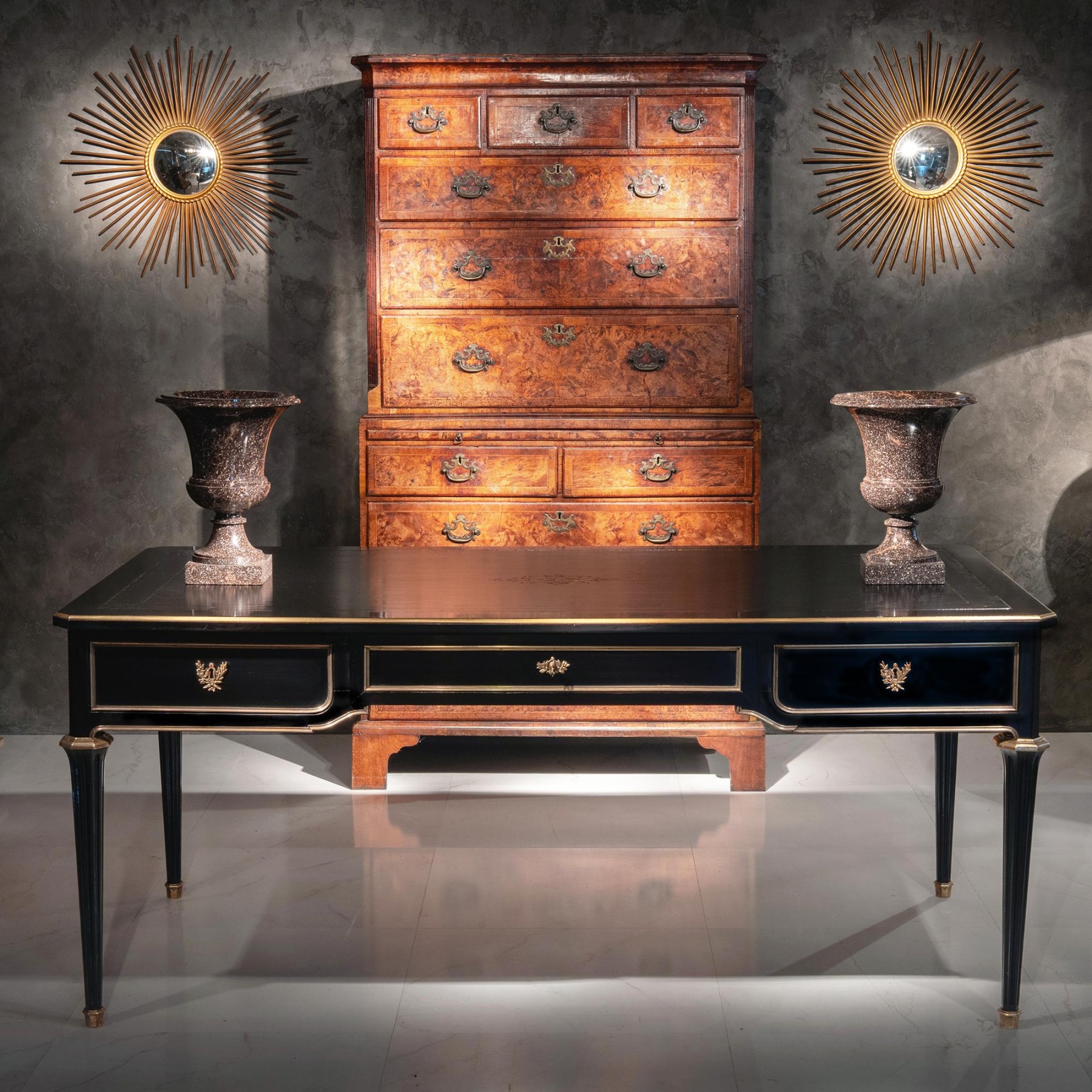
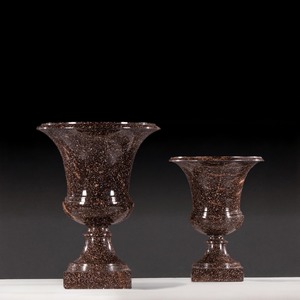
A rare pair of finely figured Swedish Blyberg Porphyry Campana Urns of grand scale dating to the early 19th Century.
Swedish Circa1820
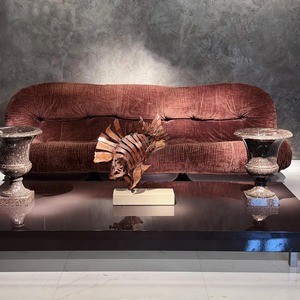
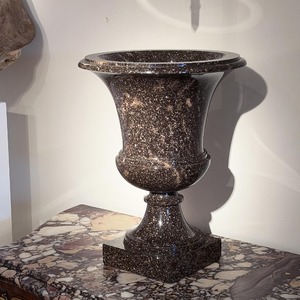
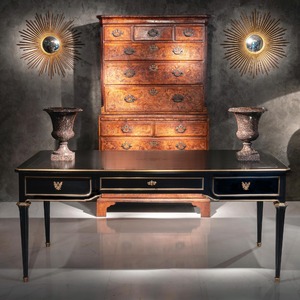
This pair of superb large urns are of bell shaped form (campana in Italian) carved from highly figured Swedish Blyberg porphyry, one of the most desirable stones still being mined in Europe at the time of the urns' production. Unusually large at 36cm in height and also rare as a surviving pair with most having been split over the years, these urns are for the connoisseur collector that work equally well in a traditional interior and also a more contemporary one. Over the years, porphyry has entranced everyone from pharaohs and Roman emperors to the likes of William Beckford, George Watson-Taylor and Thomas Hope, not to mention the likes of King George IV who had his agents in Paris purchase this piece for him in the early 19th century
Amongst contemporary collectors the late great collector Philip Hewatt-Jaboor was renowned for his love of porphyry, even going so far as to commission a floor made from the material for his home in Jersey.
The present pair of urns are of the classical Roman campana shape, a form that gained renewed popularity in the neoclassical period in Europe. The head designer at the Swedish porphyry works was Louis Masreliez who, though born in Sweden, had trained in Rome and Paris bringing the imperial tastes from these countries back with him to his homeland. Although the porphyry quarries in Sweden were discovered in the early 18th century they gained royal patronage in the early 19th century having become a viable commercial enterprise in c.1788 and its objects were ultimately placed into the palaces and stately homes of foreign monarchs and distinguished dignitaries.
Egyptian porphyry was also the most highly regarded of stones, seen as suitable only for the use of pharaohs, and the Roman conquerors of Egypt revered the stone equally. It was therefore highly significant when it was discovered that another form of porphyry could be mined in Europe as the stock in Egypt had long been exhausted. One of the leading painters and decorators in Sweden, Masreliez designed a series of masterworks in porphyry and a pair of campana urns designed by him for Princess Sofia Albertina, sister of King Gustav III, were acquired from Sotheby's New York by the National Museum of Sweden in 2001
These vases are of similar form to our pair and it is likely that the porphyry works were still using the designs left by Masreliez long after his death in 1810. The porphyry works itself provided some of Sweden's most important exports until its destruction by fire in 1866, effectively bringing to a close production on any sort of scale.
Porphyry is extremely hard and difficult to work due to the density of the material and its scarcity and high value make it all the more tricky as a proposition for a would-be sculptor. It is no surprise, therefore, that the best designers and artists were employed by the manufactory to provide designs to the sculptors and the present pieces were created by this elite team who supplied both the local aristocracy and royals and crowned heads around Europe with this desirable material.
Delivery of products is based on weight. Some products are not available for delivery, and will be collection only. For more information on delivery costs, please click here