Lighting and Mirrors at Loveday Antiques
At this time of year with long nights and winter weather, many people look again at ways to introduce additional light in to their interiors, whether by adding to or changing their choices of lighting or by considering adding an additional mirror to their home. In the 18th century, girandoles were specific forms of mirrors with candle arms located in front of the mirror plates, the idea being to reflect the light back in to the room for maximum effect and a well-placed mirror can still be used in this way to reflect the light from wall lights, standard lamps or chandeliers.
We always have a large stock of both antique and vintage lighting and mirrors as part of our collection and this blog post will focus on our current collection, moving through our stock by sub-category.
CHANDELIERS
Beginning with the largest form of lighting, we have one single and a pair of chandeliers in stock at the moment. These pieces will act as the focal point of a room and are perhaps the most obvious way to update an entire interior scheme by only changing one piece. A well chosen chandelier with enhance everything around it and give years of service.
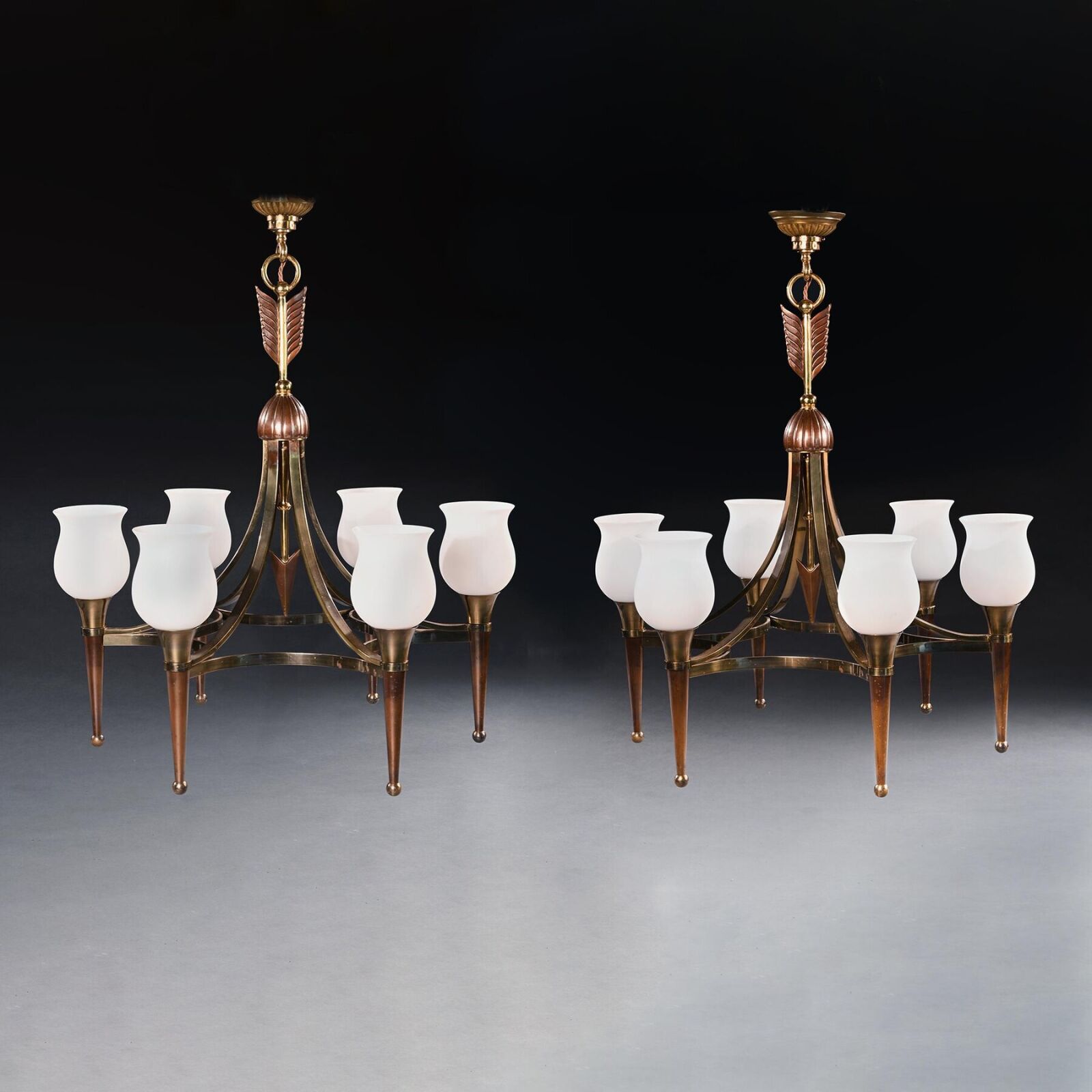
Beginning with our pair, we have these fine examples most likely made by Maison Jansen after an original design by André Arbus.
Click here to view these chandeliers
In the mid century neoclassical revival taste, these fine pieces feature Cupid's arrow on their stems, adding a note of romanticism, and their fine proportions. Their fine glass shades are supported on metal frames employing both highly polished and contrasting patinated finishes.
Pairs of chandeliers are rare survivals from any period and these pieces, made. c.1950, have a timeless feel to them meaning that they will work well in virtually any setting from the most traditional to the avante garde. We also have wall lights to complement these chandeliers which will be discussed below.
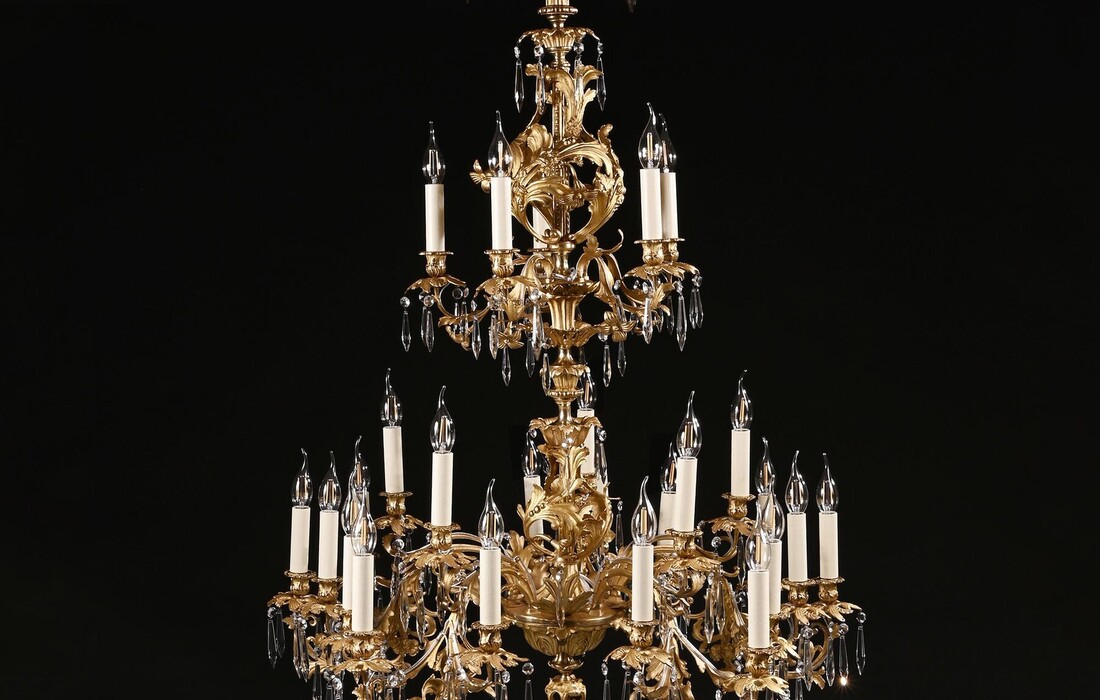
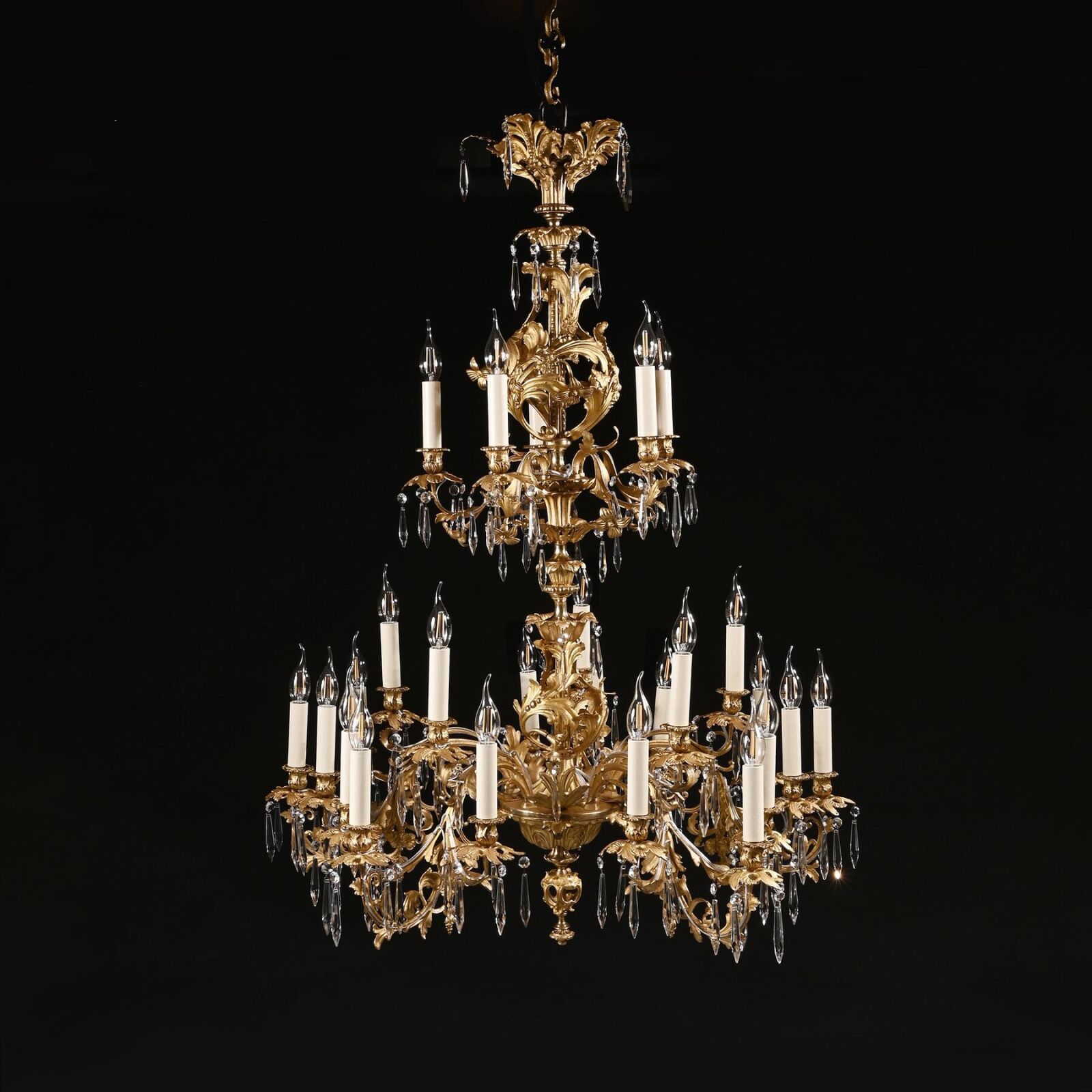
Our single chandelier is a late 19 th century piece in the rococo revival style of monumental size and scale
Click here to view this chandelier
This piece supports 25 lights and would have been made for an incredibly important house of the period. It is French in origin and recalls the work of the great bronziers in Paris in the mid 18th century. Executed throughout in gilt bronze, ormolu, which has been finely cast, chased and finished this is an incredibly opulent piece. This is a chandelier of the very highest quality and of near-palatial scale and we are very pleased to be able to offer our clients the chance to acquire this piece.
WALL LIGHTS
Next we are pleased to highlight our selection of wall lights from the current collection. Wall lights come in many different forms and we try to have representative examples to suit many different tastes and budgets.
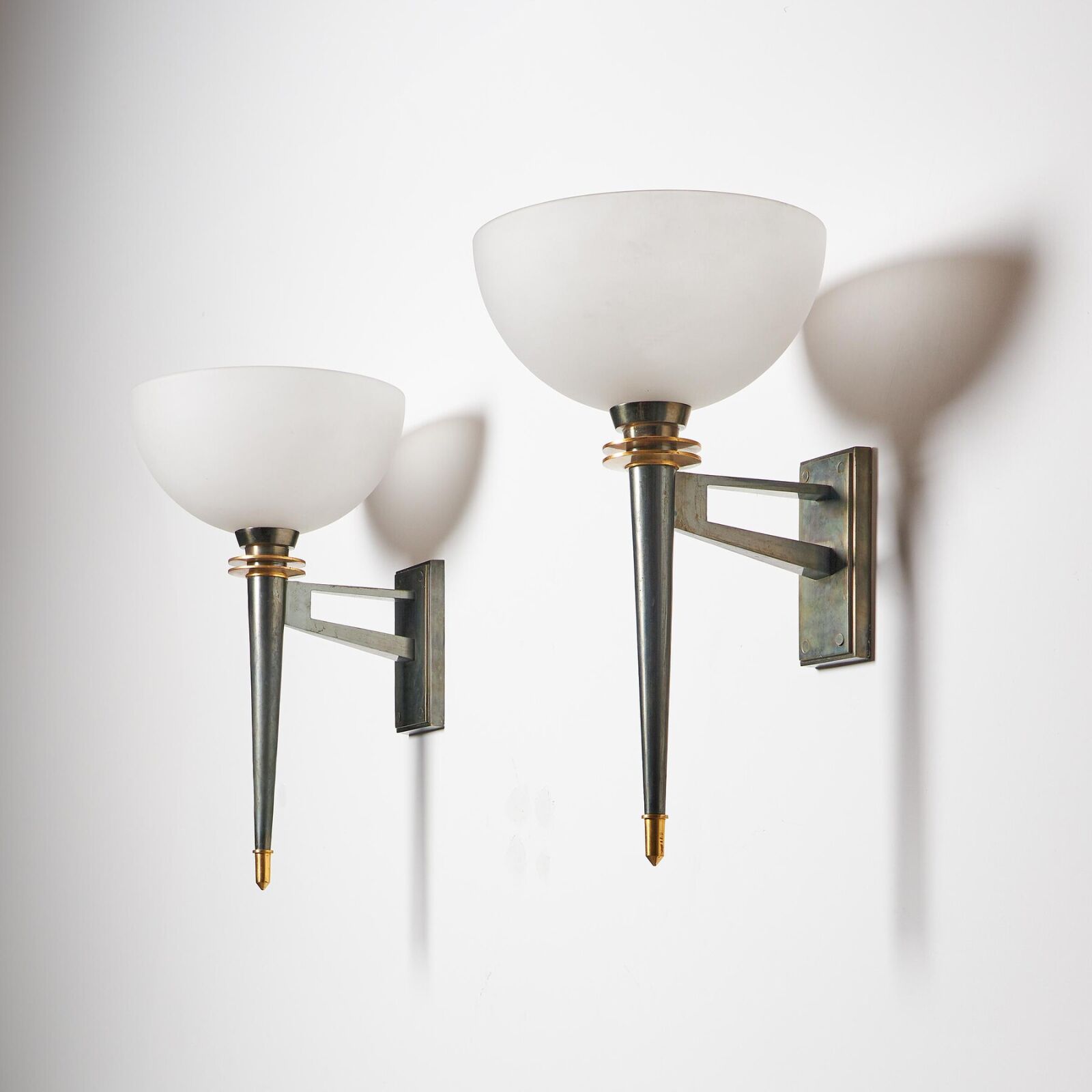
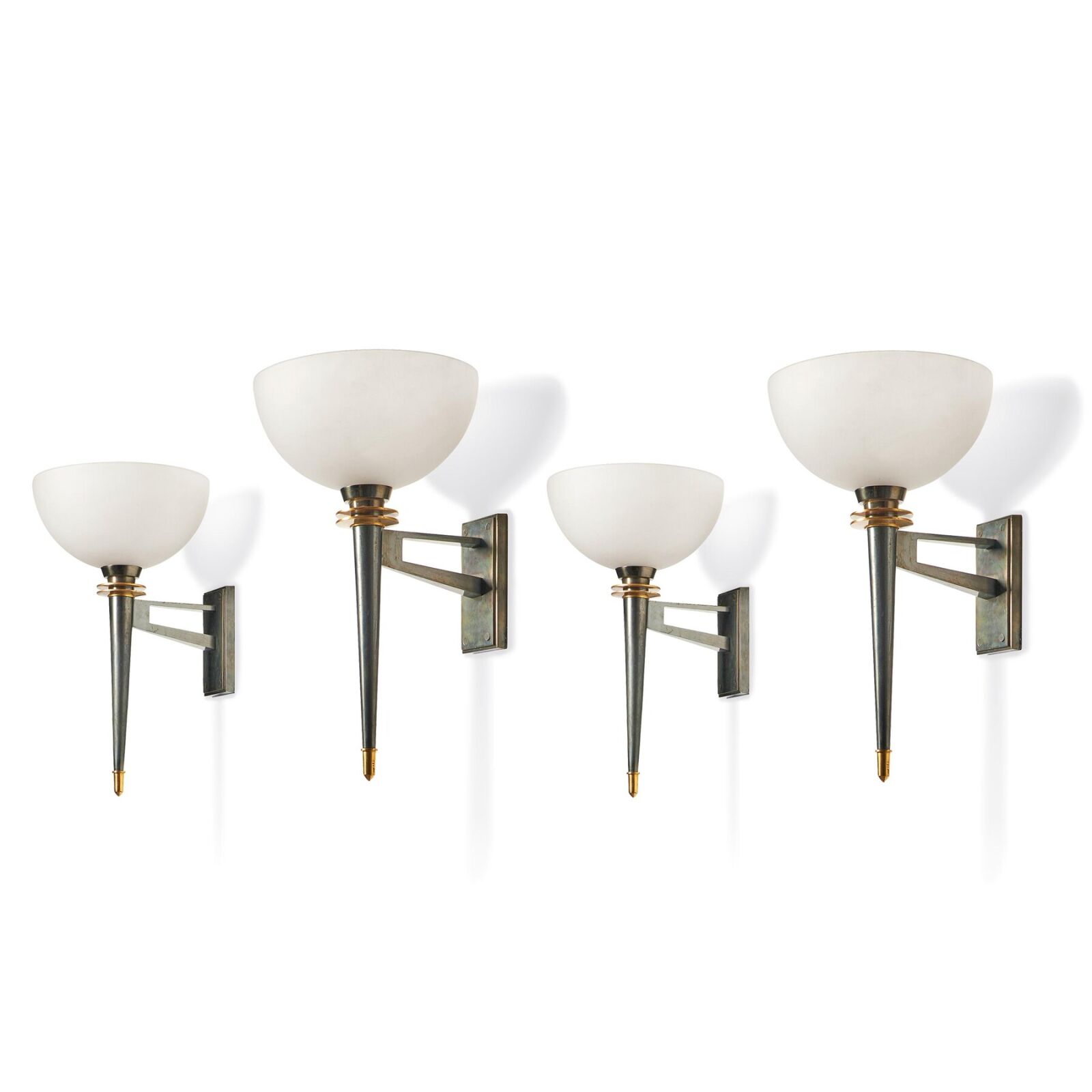
We begin with a pair, and a set of four, all oof a design attributed to André Arbus and Gilbert Poillerat and the perfect complement to our pair of Arbus chandeliers discussed earlier.
Click here to view these lights
Click here to view these lights
These lights are in one of the most instantly recognisable of all of Arbus's patterns, relating to a drawing by Arbus reproduced in Andre Arbus: Architecte-decorateur des Annees 40 by Yvonne Brunhammer page 302. Made in France c.1940, these lights are the height of sleek mid century modernism and understated luxury. Having a set of four of these is highly unusual, and, with the additional pair, the chance to make a complete set of six is an opportunity that is unlikely to present itself again once these fine pieces have been sold. These lights are true design classics.
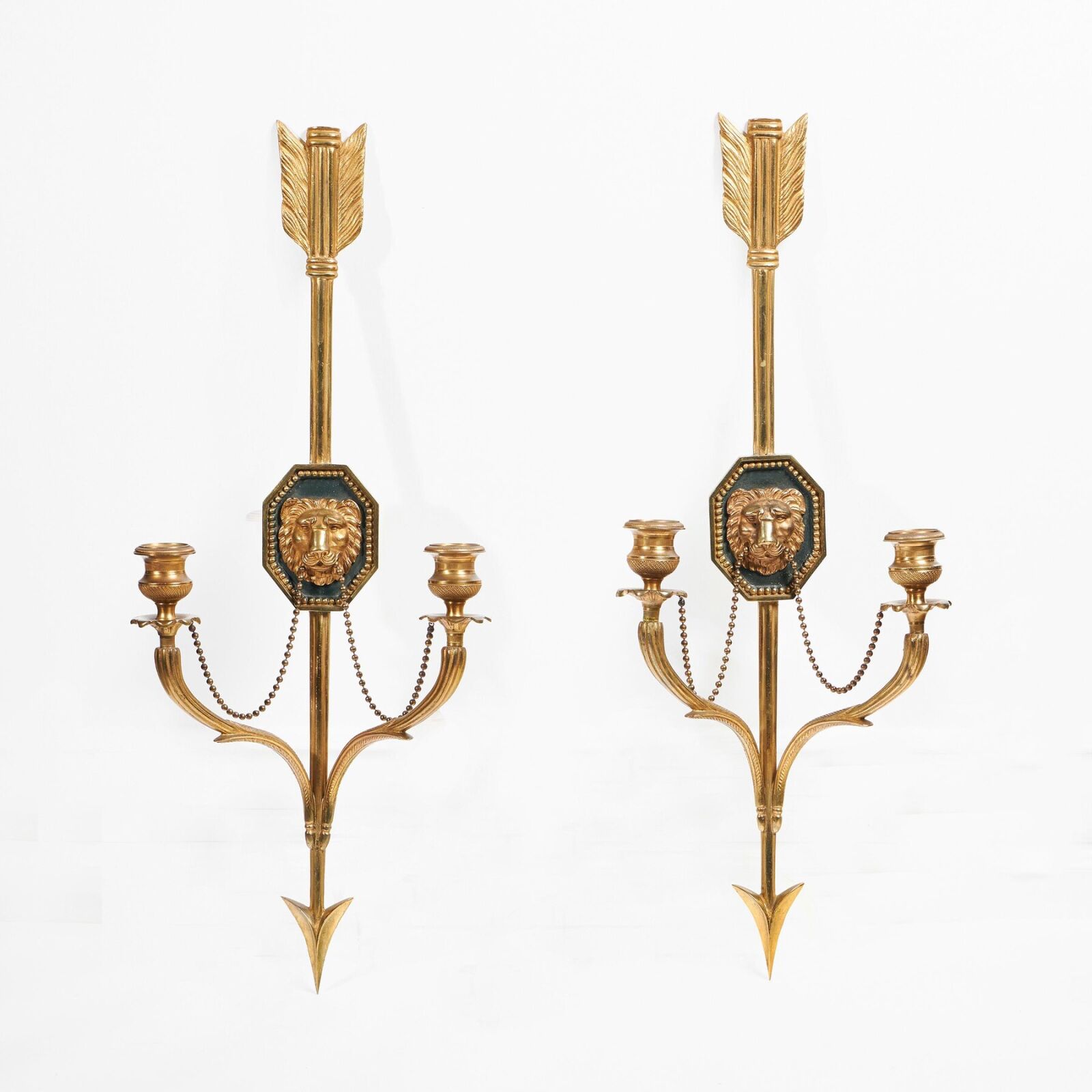
Next, we have a pair of Italian French Empire style wall lights made c.1880 somewhat in the manner of the French master Claude Galle.
Click here to view these appliques
Like the Arbus chandeliers, these wall lights feature feathered arrows in their design, likely symbolising Cupid's arrow and love and romance. They relate somewhat to a design for wall lights for Fontainebleu created by Galle in 1806, a later set then being supplied to the Trianon in 1809. Our lights have adapted this design, creating a somewhat lighter feel whilst keeping all of the refinement of Galle's original masterpieces. The central swagged lion masks are beautifully cast and chased and these striking and decorative pieces are ideal for any collection.
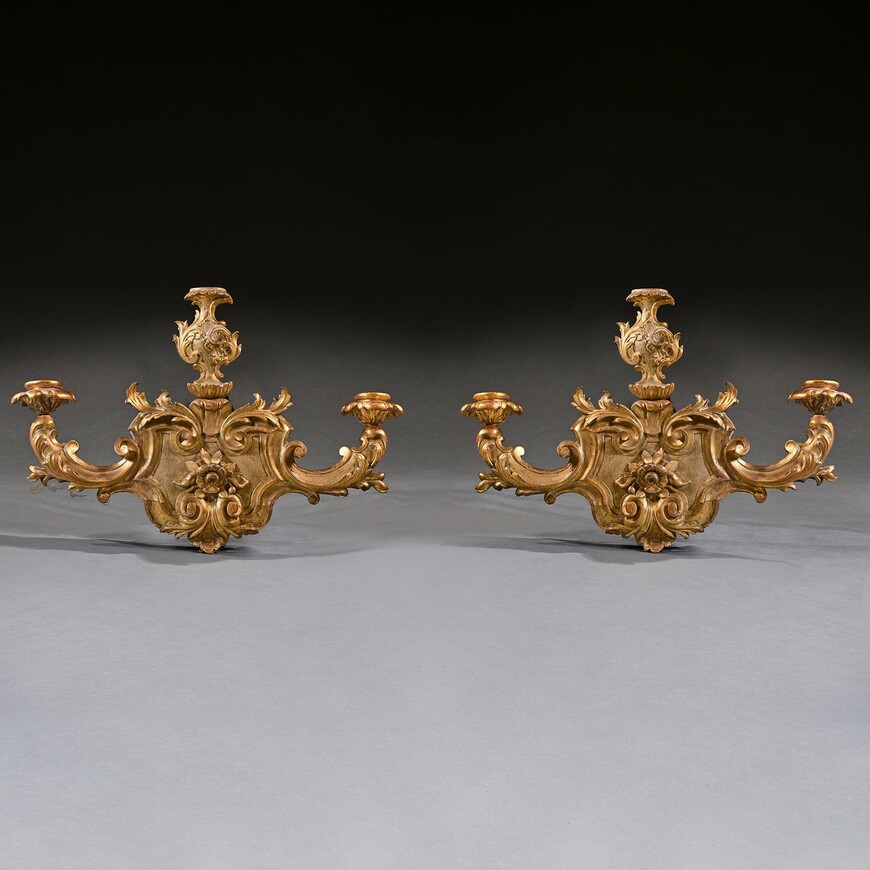
Of 18th century date and in the rococo style, we have a fine pair of Venetian giltwood wall lights or sconces
Click here to view these sconces
These pieces are highly decorative and a little more restrained than the French rococo designs which gave birth to that style. These pieces are largely symmetrical with the exception of the crestings, making them rather easier to place than some of the more outlandish and entirely asymmetrical French examples. These lights were regilded, probably in the 19 th century, but have since acquired a wonderful colourand patination and are highly attractive accent pieces.
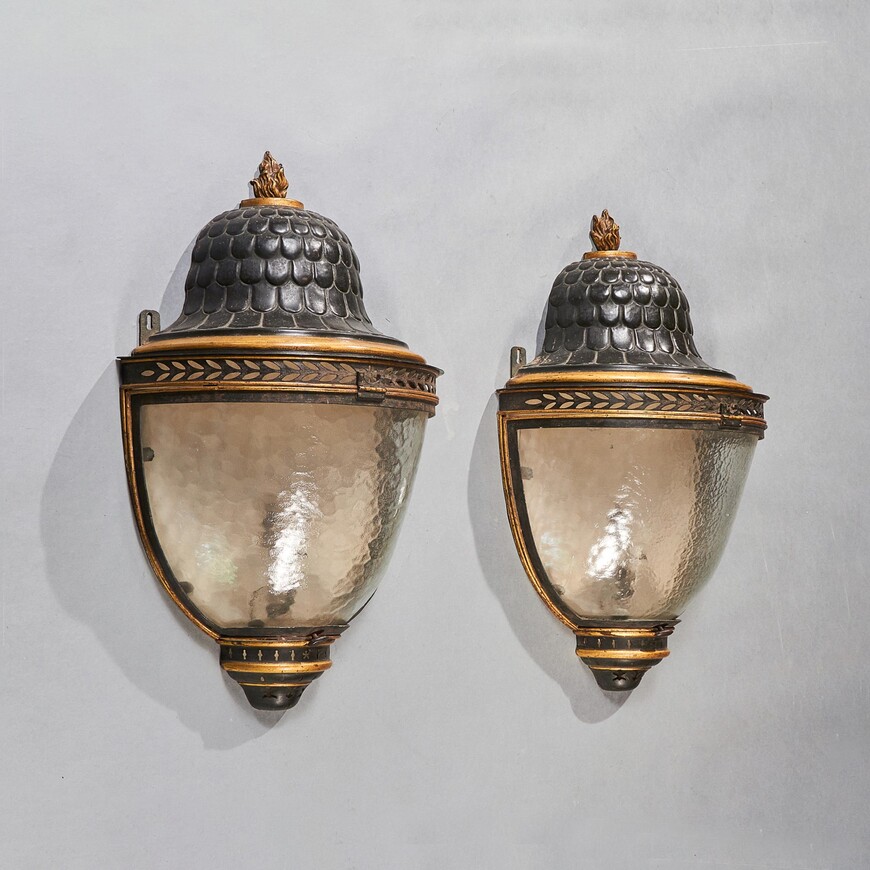
We conclude this section with a pair of large, and extremely eye-catching, wall lanterns made of painted tin (toleware)
Click here to view these lanterns
Wall lanterns were designed to keep a candle burning, insulated from any draughts in the room, and also to reduce the risk of fire which was the cause of the loss of many great houses throughout the world in the pre-electric age. These pieces have been converted to electricity and are the perfect way to add a little elegance to a room for those special occasions or used as every day lighting if preferred. The imbricated or scale-form carving to the tops is likely a reference to leather armour worn by classical warriors and these fine pieces retain their original painted and parcel gilt finishes.
FLOOR OR STANDARD LAMPS
The largest form of stand alone lighting, the floor or standard lamp is a staple of all interiors and we try to keep several examples in stock at any one time.
Beginning with a highly unusual design, we have this Italian three arm example from c.1960
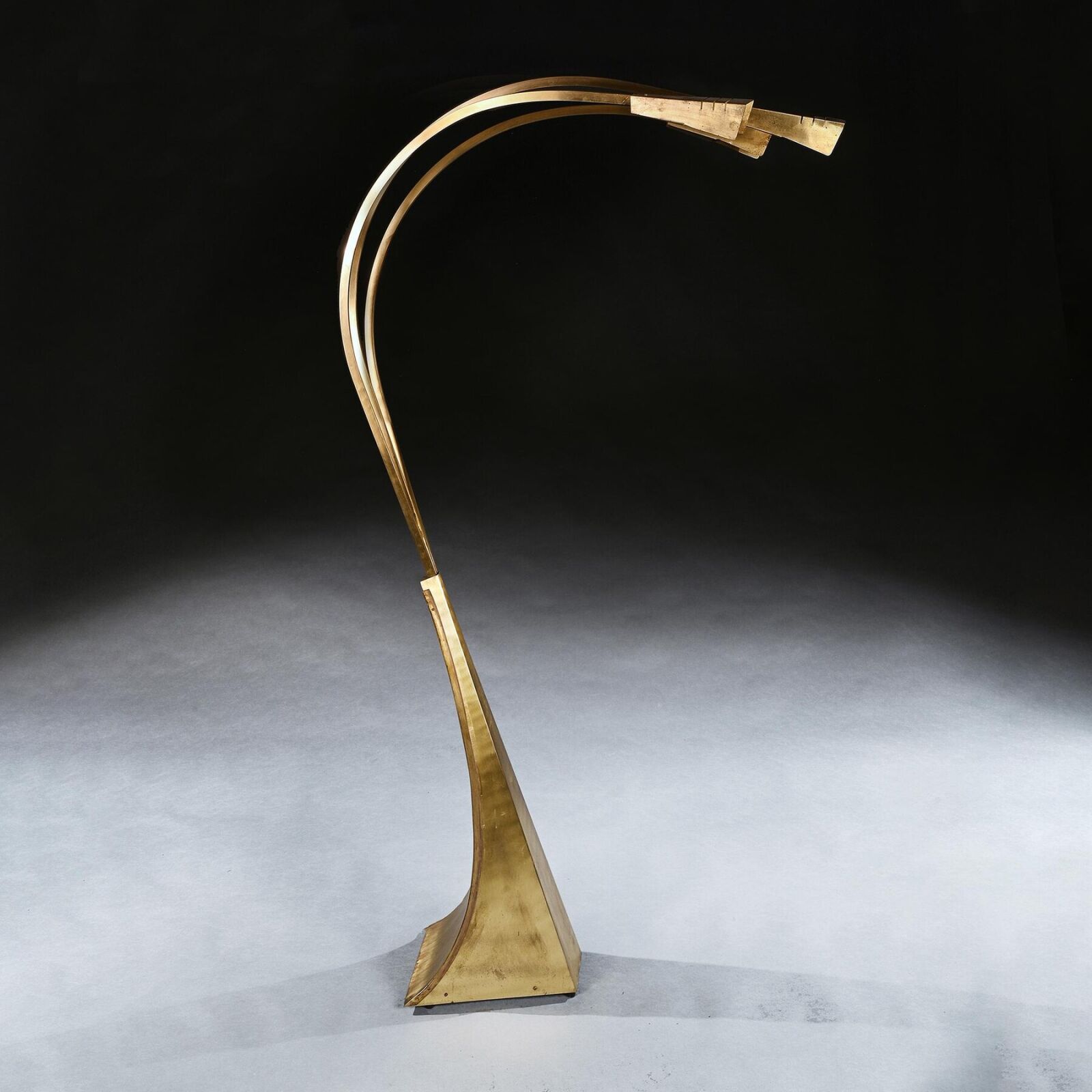
Unlike so many examples, this piece has not been cleaned and repolished and therefore it retains a fantastic patination and signs of age and use, all highly desirable to the advanced collector and decorator alike. The fretted brass shades are very distinctive and this piece blends modernism with a degree of naturalism which is often missing from pieces of this period and which adds great character to the piece.
A true design classic of the 20th century is the Jean Royère adjustable floor lamp and we have both a single
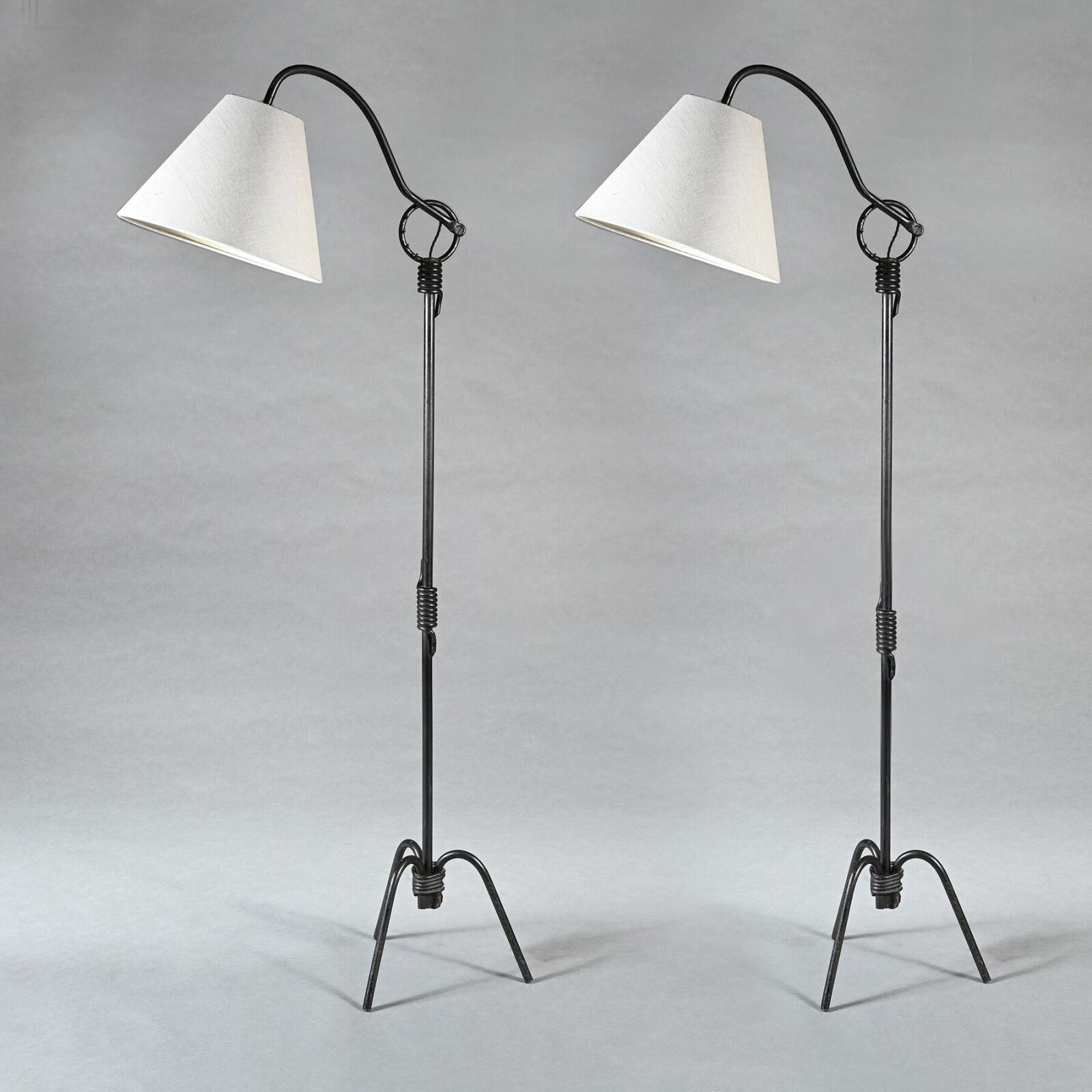
Click here to view these lamps
of these highly distinctive design classics. Made of wrought iron and all retaining fine patination and with newly replaced shades, these pieces are all ready to place. They will add an accent of quiet luxury to any interior scheme.
Finally in this category we have a gilt bronze floor lamp by Maison Ramsay
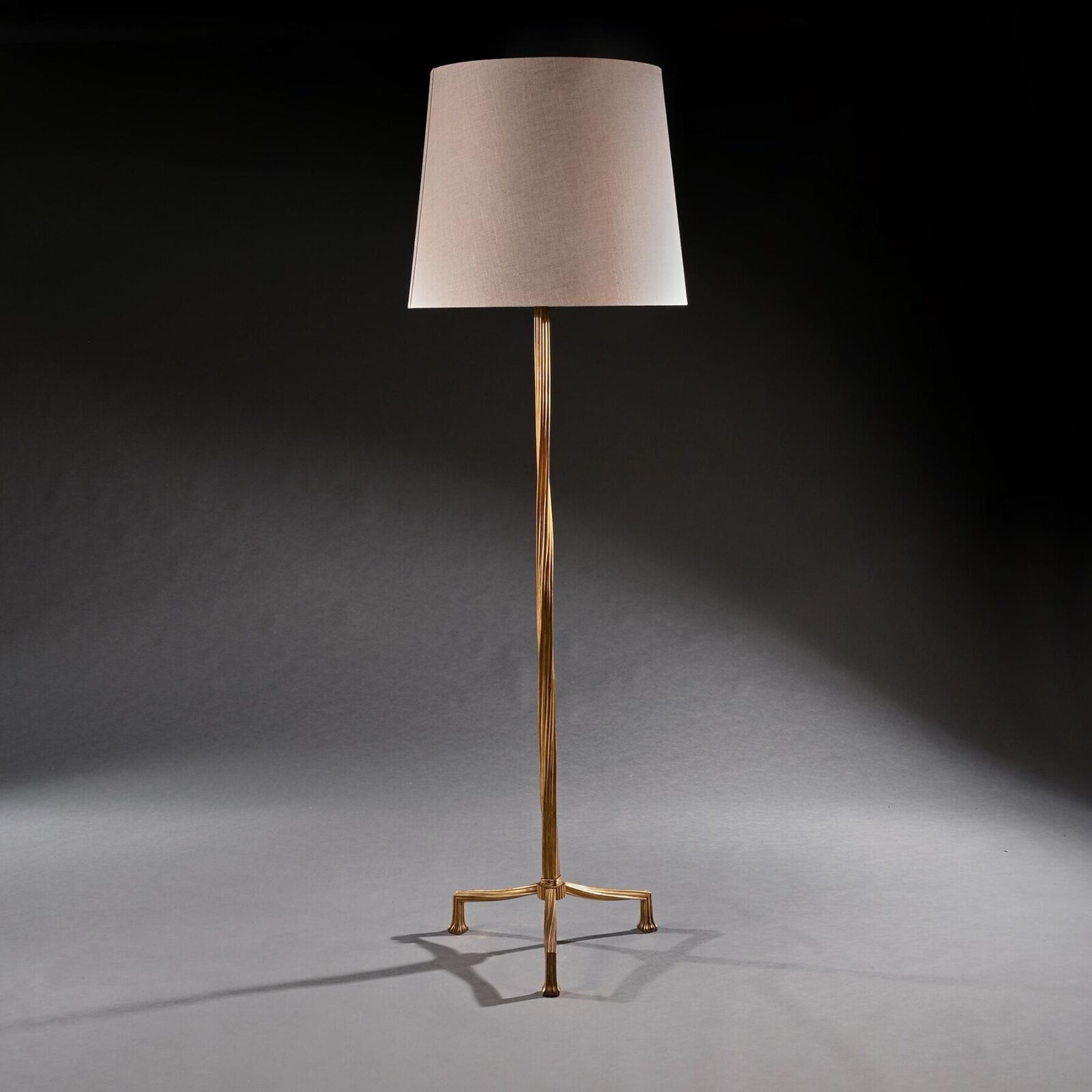
A highly sculptural piece both in its decoration and the materials used, this is the epitome of French mid century luxury design with no expense spared in any aspect of its design or production. It is the perfect blend of luxury and practicality and will enhance any room.
TABLE LAMPS
Finally, in terms of lighting, we move on to table lamps. We always have plenty of examples in stock and here are some of our current favourites.
We begin with a rather extraordinary torch or cone-form lamp firmly attributed to the designer Jacques Adnet.
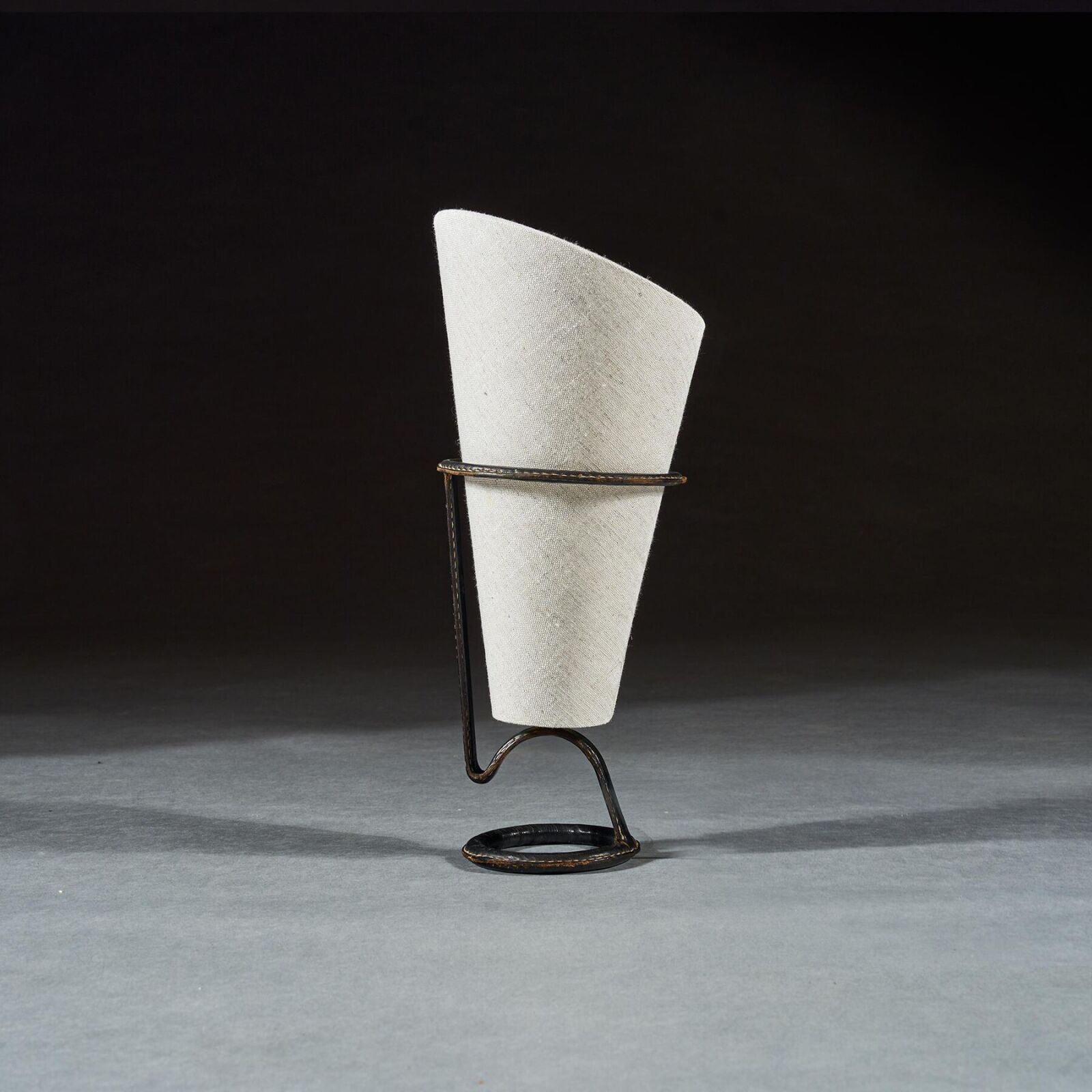
The remarkable folded form of the linen shade is complemented by the hand stitched leather covering the internal metal frame, an Adnet trademark. Adnet preferred to source his leather from Hermès of Paris for many of his projects, indicating his intention to use the very best materials available, regardless of the high prices that they would command.
This is an extremely interesting and somewhat esoteric piece which will appeal to the connoisseur.
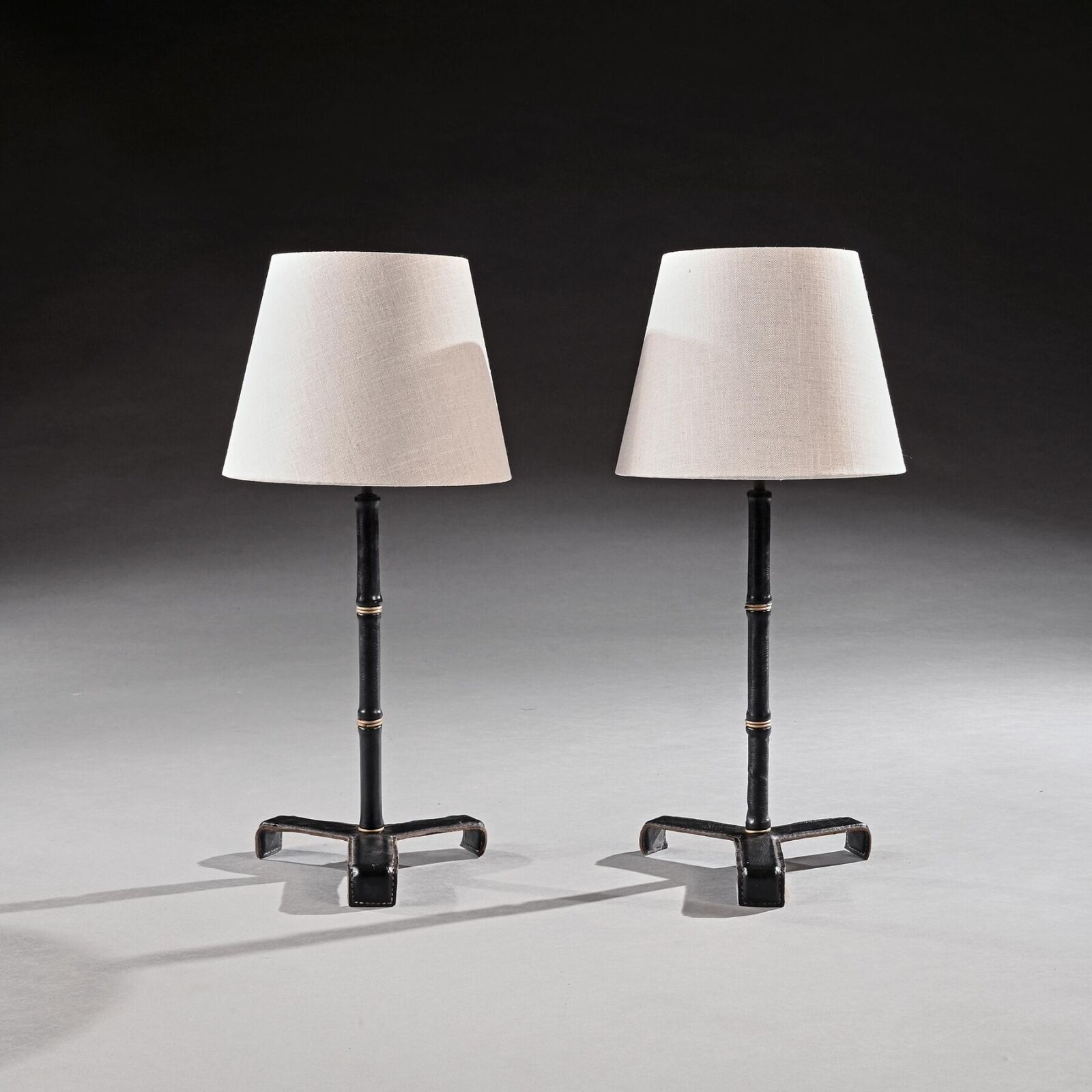
Also attributable to Adnet are these table lamps, a rare pair, with their simulated bamboo central columns
Click here to view these lamps
Again the metal frames are covered in hand stitched black leather with contrasting stitching, the stitching being both a practical part of the design and a decorative accent. These are highly desirable pieces.
Our final Adnet example utilises red leather rather than black and takes the form of a double-stemmed simulated bamboo tree with a single shade
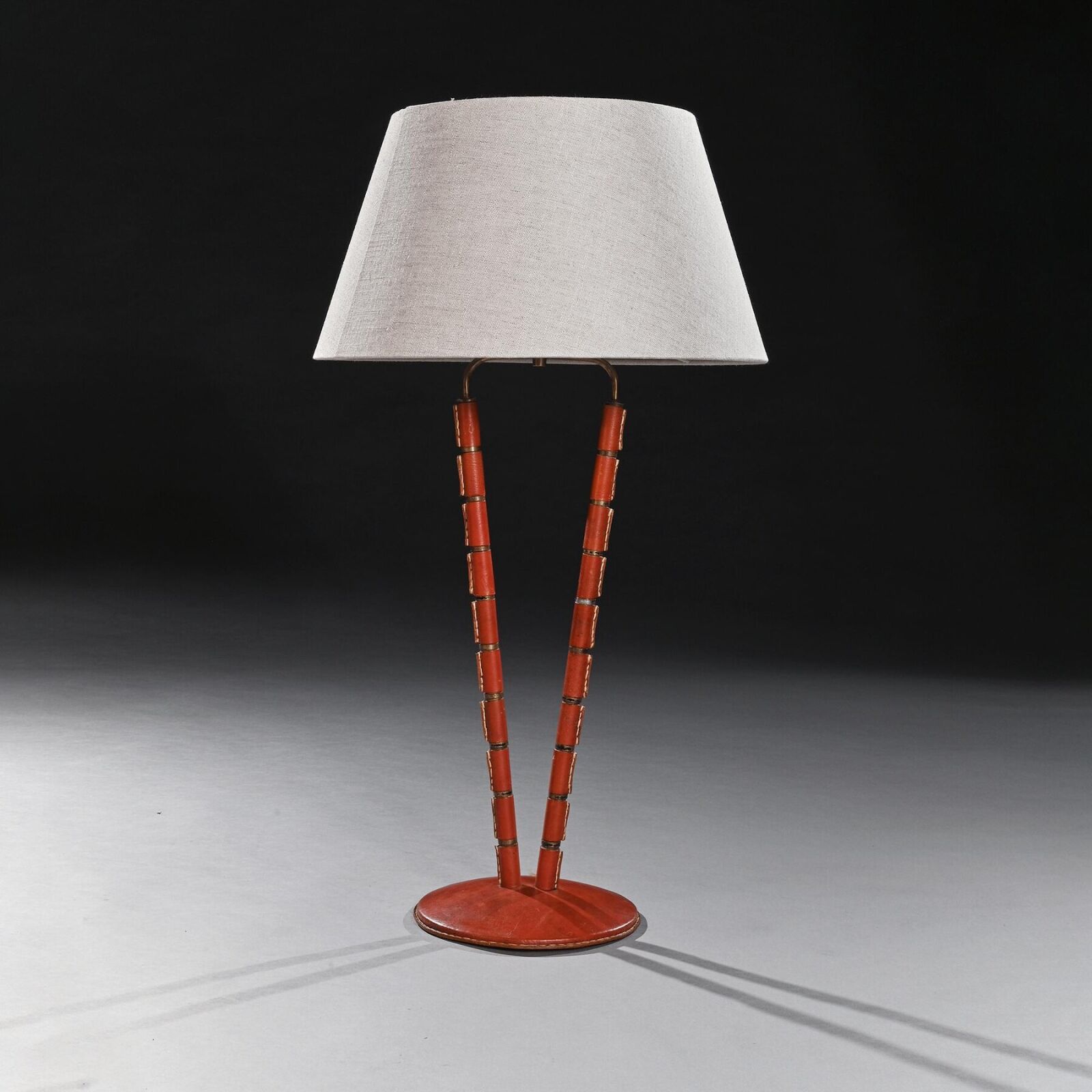
This form is much rarer than the single stemmed examples and bears all the hallmarks of Adnet's legendary attention to detail and eye for beauty. A very fine and unusual piece. We conclude our table lamp review with this piece, a vase lamp in stoneware pottery of truly extraordinarily large scale and size
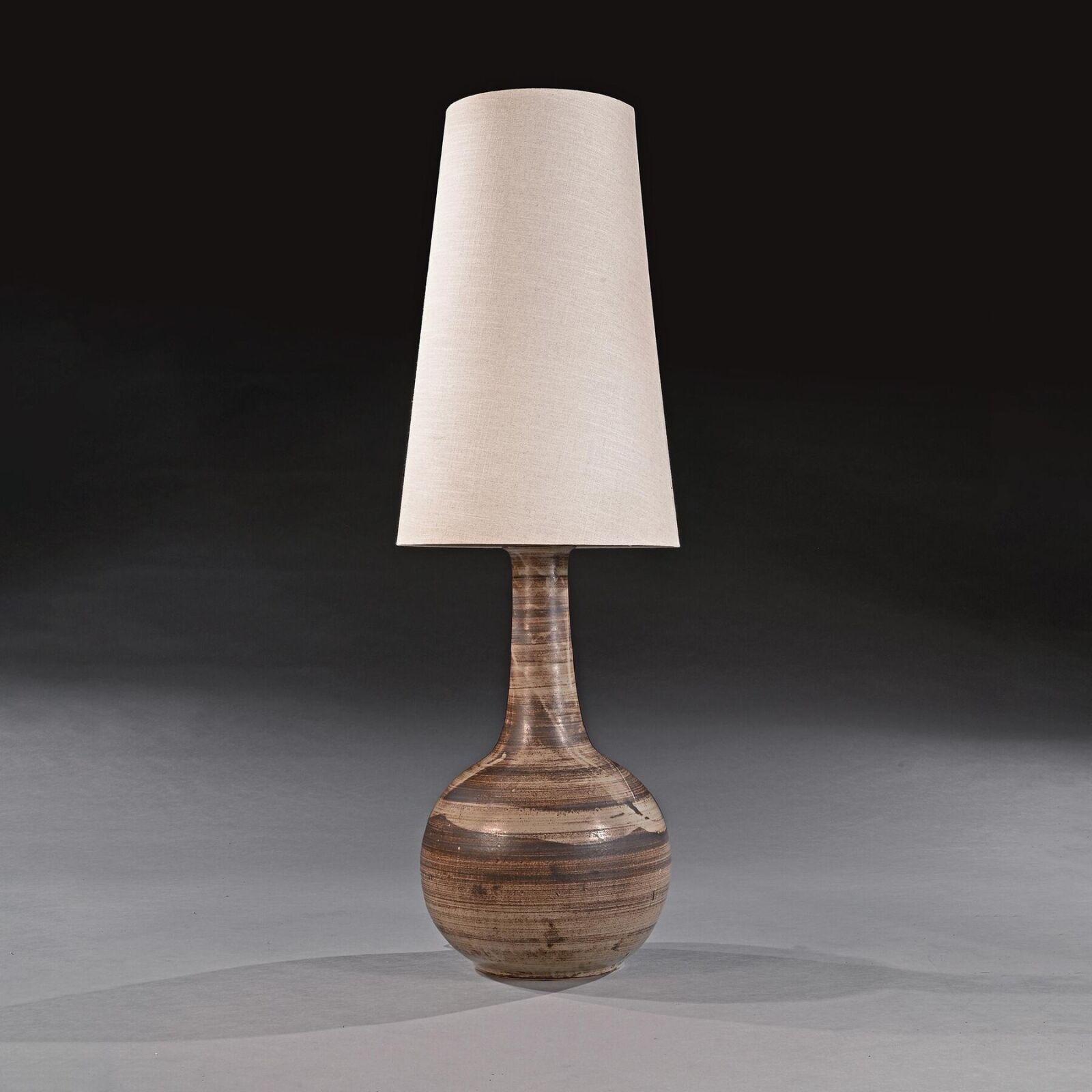
This piece is 138cm in height and 37cm in diameter and so is a true statement piece. Of French origin, this piece is clearly inspired by the studio pottery movement of the earlier 20th century which, in turn, took much of its inspiration from Japanese designs. The muted colour palette, swirling glaze and fine lines and proportions make this a highly distinctive and attractive piece and the linen shade, of elongated cone form, is a perfect complement to the design of the lamp base.
It is important to state at this point that all of our electric lighting has been fully PAT tested for safety and can be wired for European, UK or US use as appropriate.
MIRRORS
We conclude this post with our current selection of mirrors, ranging from the 18th century to the mid 20th century and from various countries of origin. As ever, we attempt to collate a collection of pieces that will appeal to any taste and as large a variety of budgets as is possible. For ease, we will work through these mirrors in rough chronological order from the earliest to the most recent in terms of date of manufacture.
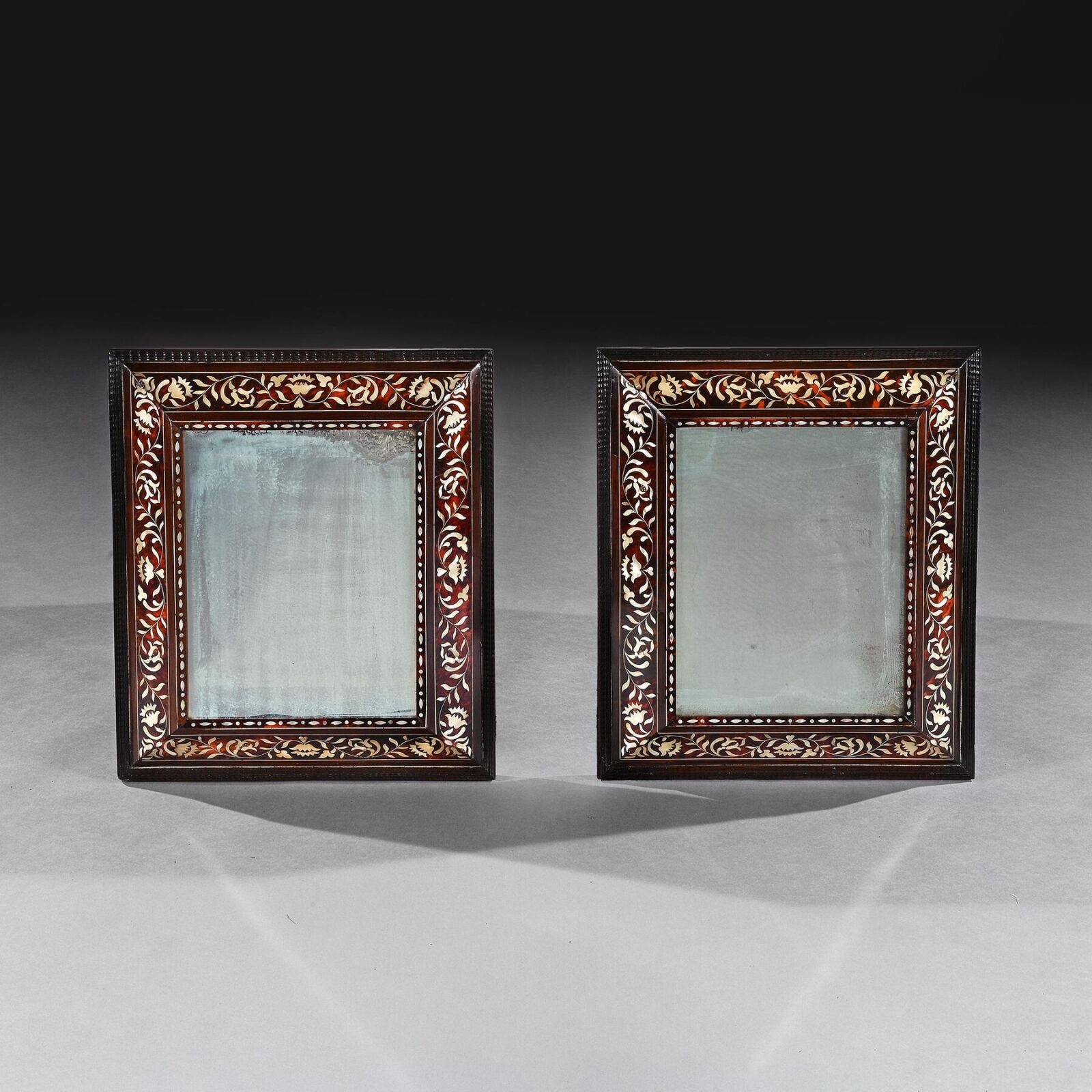
Made in c.1720 in the Spanish colonies in South America, either Peru or Mexico, we have a fine pair of enconchado mirrors, veneered in tortoiseshell and then inlaid with mother of pearl and bone
Click here to view these mirrors
These mirrors are of rectangular shape. The ripple mouldings to the edge are associated with the framemakers active in the Netherlands in the 17 th century, the style then spreading throughout Europe. Here it has obviously been transposed to the Spanish overseas territories and the mirrors are therefore fascinating examples of the cultural exchanges between south America and Europe at this time. The rich tortoiseshell veneers contrast beautifully with the finely inlaid naturalistic inlay of flowers and leaves in mother of pearl, with bone stringing for further contrast.
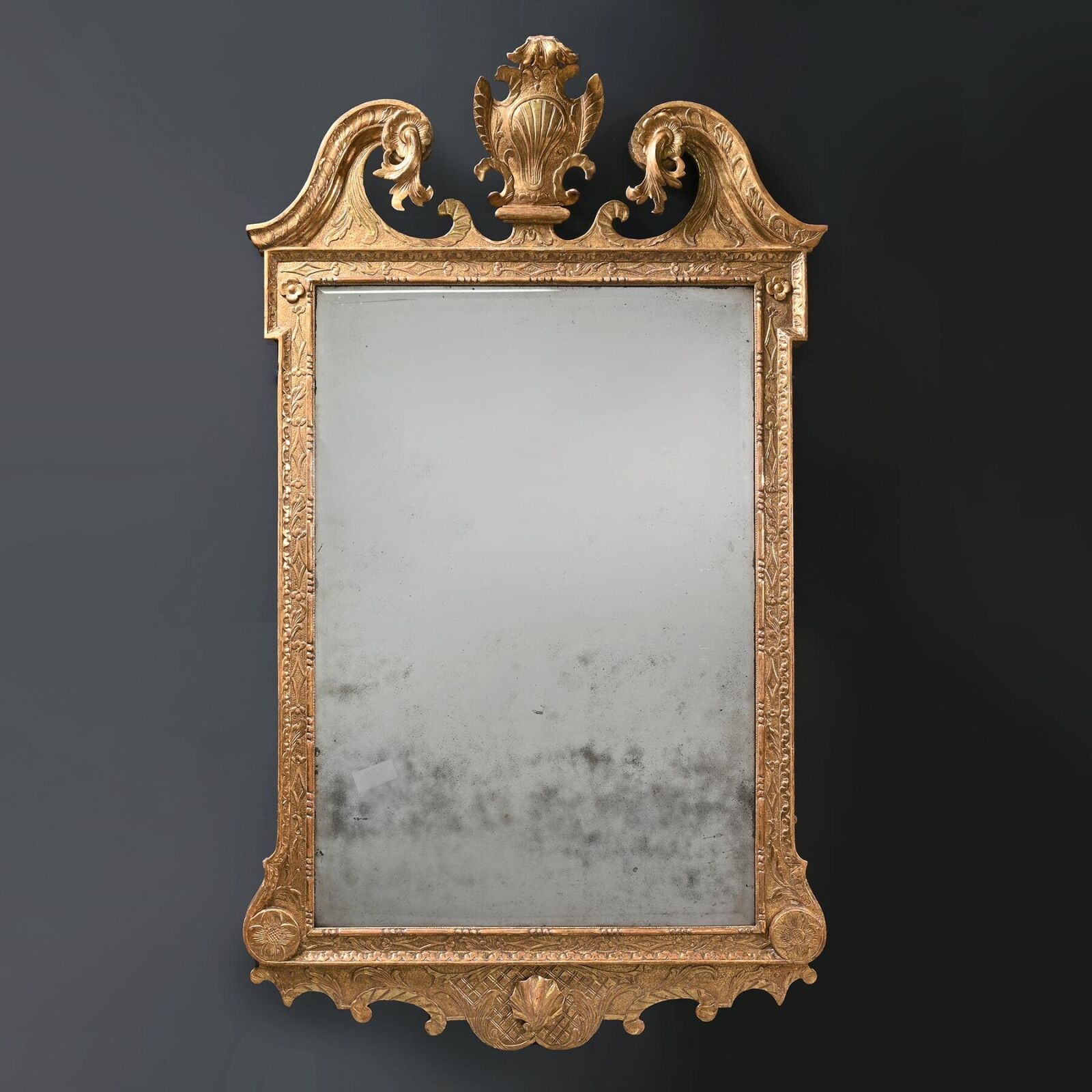
These are hugely sophisticated mirrors, utilising the highest quality workmanship and luxury materials and are as desirable now as they were when first made. Made around the same time in England is this fine gesso mirror in the Palladian taste.
Click here to view this mirror
The tabernacle-type frame is executed entirely in giltwood with finely cut gesso decoration which has survived in excellent condition. The swans neck pediment filled with a gilt cartouche. The gesso cutting utilises strapwork motifs as well as applied shells and paterae. This is a fine example of a mirror from the transitional George I/George II period and is of excellent quality.
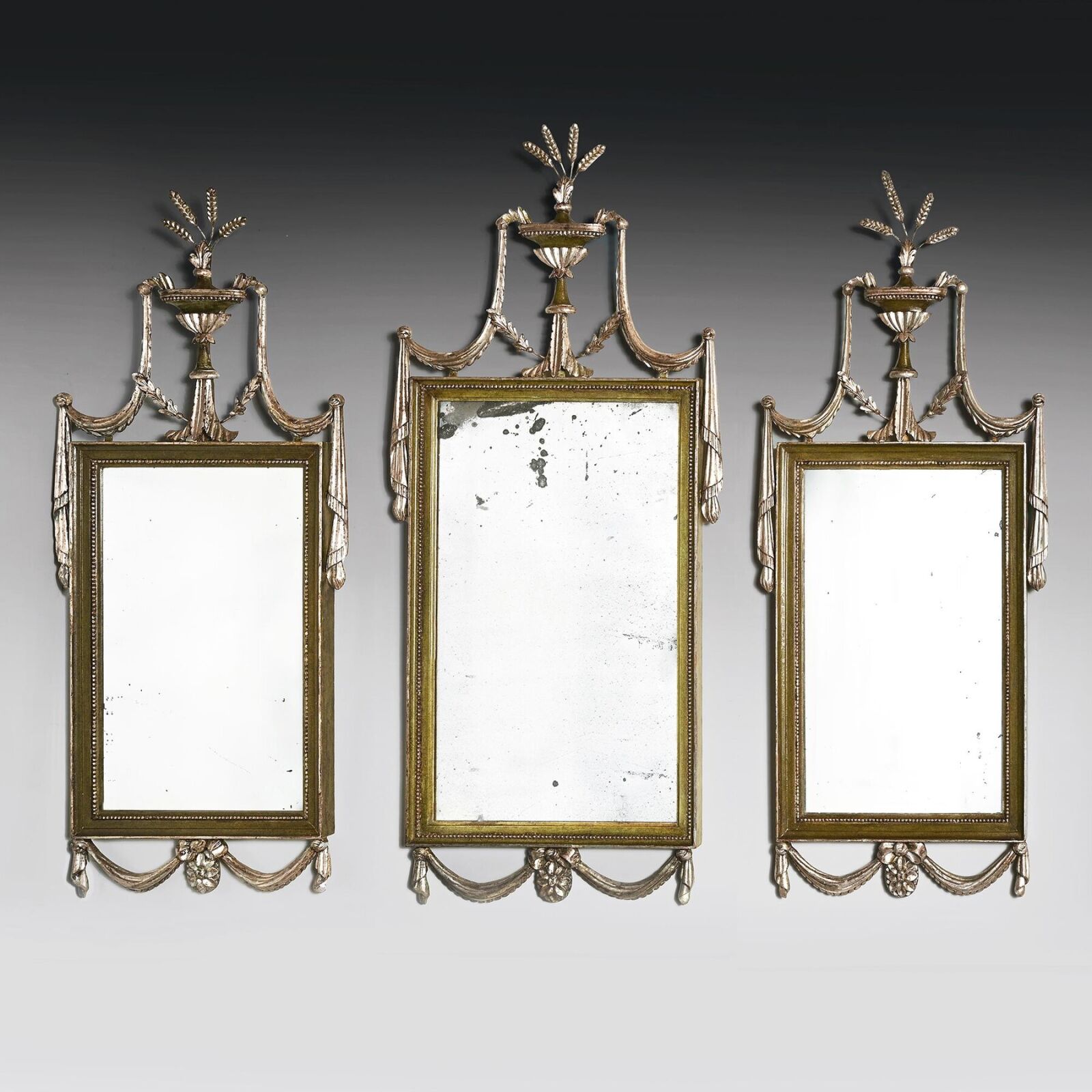
Also English but of late 19 th century date we have a fine suite of three mirrors made by the famous firm of Gillows of Lancaster and London and retaining their original silvered and green painted finishes.
Click here to view these mirrors
The mirrors come from Coilsfield House, home of the Earls of Eglinton who were loyal Gillows clients for over 100 years. The original 18th century Gillows design upon which these pieces are based is recorded in the Gillows records in Westminster Archives and these pieces were presumably made to either replace an earlier set of mirrors of this design or simply to complement them. The finish, employing both silvering and green painting, is highly unusual and makes these attractive mirrors all the more interesting. The fact that they survive as a suite of three is also rather remakable.
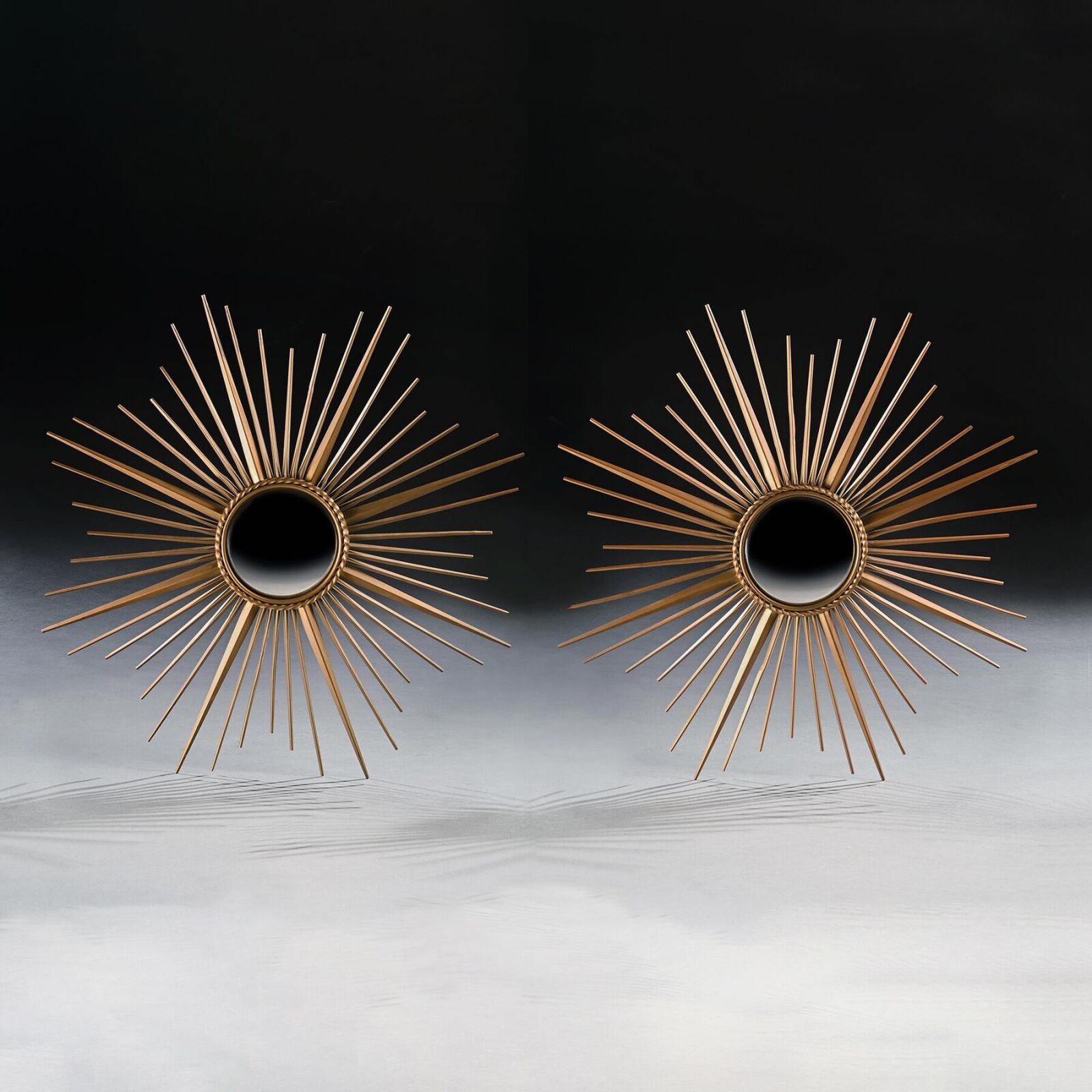
Of very different form but equally decorative are a pair of mid century Chaty Vallauris sunburst mirrors, c.1960
Click here to view these mirrors
made in France by the Provenance-based firm, associated today most particularly with mirrors of this design. They are highly attractive and decorative and this style has never really gone out of fashion since they were introduced, the mirrors now being regarded as iconic pieces of modern design.
We hope that you have enjoyed this survey of this particular facet of our stock and, as always, please do not hesitate to contact us if we can supply further information about any pieces of interest or help you to add to your collections. We are always happy to help.